
The political transitions in Mali, Burkina Faso and Niger have transformed the Sahel into one of the world’s most contested geopolitical arenas. As France and other Western partners have steadily reduced their military and political presence, the Alliance of Sahel States (AES) has moved closer to Moscow, reshaping the regional balance of power.
It was against this backdrop that Russian Foreign Minister Sergey Lavrov travelled to Niger this week for the second session of high-level consultations between Russia and the AES. The meeting underscored both sides’ intention to deepen cooperation in security, diplomacy, trade, energy, mining, politics and culture.
The consultations also served as preparation for the next Russia-Africa Summit, scheduled to take place in Moscow in October, where Russia hopes to strengthen political partnerships and attract African governments and investors to Moscow-backed projects.
Beyond reinforcing bilateral ties, Russia is seeking to expand its influence across Africa through defence cooperation, trade and investment.
Diplomacy and international support
Diplomacy remains a cornerstone of Russia’s strategy. During this week’s consultations in Niger, Russia and the AES reaffirmed their commitment to coordinating positions at the United Nations and other international organisations, while strengthening cooperation through the Group of Friends in Defence of the Charter of the United Nations.
Both sides said they support what they describe as a more equitable international order and oppose neo-colonialism.
For Moscow, which has faced growing diplomatic isolation from many Western countries since the outbreak of the war in Ukraine, securing the support — or at least the neutrality — of African states in international forums has become an important strategic objective.
In 2022, Eritrea was the only African country to vote against the UN General Assembly resolution condemning Russia’s military intervention in Ukraine. By 2026, six African countries, including all three AES member states, voted against the annual resolution entitled Support for a Comprehensive, Just and Lasting Peace in Ukraine, while 19 African countries abstained.
Expanding military cooperation
Security has become another major pillar of Russia’s engagement in the Sahel.
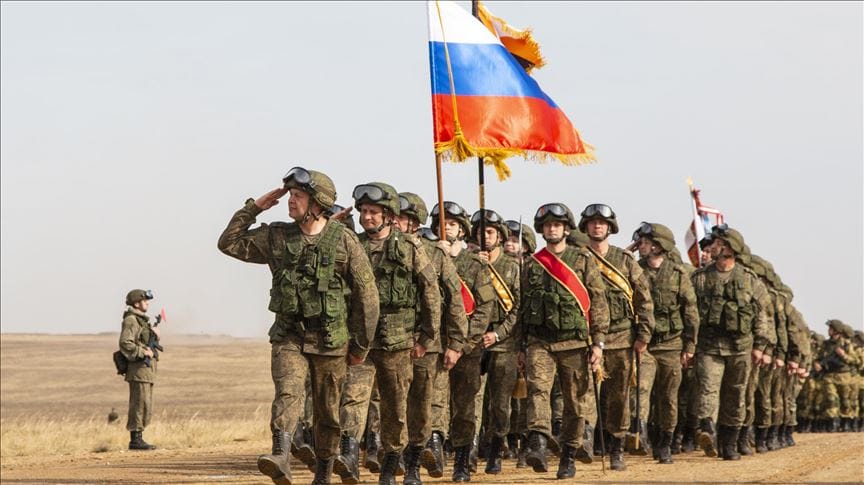
Through Africa Corps, which has gradually replaced structures previously operated by the Wagner Group, Moscow is seeking to establish permanent logistical bases and reinforce its long-term military presence in the region.
Since 2021, Russia has supplied Mali, Burkina Faso and Niger with military equipment, specialised training and technical assistance as the three countries continue to confront escalating violence by armed groups.
Lavrov’s visit came as the AES works to operationalise its planned joint military force. Moscow has reiterated its willingness to support the initiative through training, equipment and technical assistance.
Competing for influence
Russia’s strategy extends well beyond military cooperation.
Following the withdrawal or suspension of several French media outlets in parts of the Sahel, Moscow has expanded its media footprint through RT, Sputnik and a network of Russian Houses, institutions officially tasked with promoting Russian language and culture.
These efforts have been reinforced through social media campaigns, economic forums, political summits and strategic communications aimed at strengthening Russia’s image among African audiences.
Energy, mining and economic interests
Economic cooperation forms another key element of Moscow’s strategy.
Russia is seeking to deepen partnerships in the energy and mining sectors, particularly in Niger, which holds some of the world’s largest uranium reserves.
Niamey recently signed a strategic agreement with the Russian company Uranium One, reflecting the government’s efforts to diversify its international economic partnerships as relations with France continue to deteriorate.
However, several Western analysts argue that these partnerships also serve Russia’s own strategic interests.
Joseph Siegle, Director of Research at the Africa Center for Strategic Studies under the US Department of Defense, describes Russia’s engagement as largely transactional. According to him, Russian forces primarily protect allied governments and strategic mining sites.
French officials have voiced similar concerns, accusing Moscow of pursuing what they describe as the predatory exploitation of natural resources while fuelling anti-Western sentiment as part of a wider geopolitical rivalry.
Some analysts argue that Russia is increasingly developing a model that combines military cooperation with economic partnerships to secure long-term access to strategic resources.
Similar trends have been identified in the Central African Republic, where Russia has maintained a significant presence for several years and where multiple reports have described an economic model closely linked to natural-resource extraction.
Differing assessments
Not everyone believes these partnerships are delivering meaningful benefits for local populations.
Burkinabe political analyst Daouda Emile Ouédraogo argues that the economic gains remain limited.
“We are not seeing greater investment in mining, energy or infrastructure. It is much the same as before. Western countries were criticised for exploiting natural and mineral resources, and today the same pattern continues,” he said.
According to Ouédraogo, although some areas have experienced improvements in security, many communities continue to struggle with insecurity, inflation, unemployment and poverty.
AES governments, however, present their partnership with Moscow as one based on respect for national sovereignty and the diversification of international alliances.
Attaye Ag Mohamed, a prominent critic of Mali’s military authorities and an influential member of the Azawad Liberation Front (FLA), offers a sharply different perspective.
He argues that Russia’s involvement in Mali reflects what he describes as an “imperialist” agenda and contends that the country’s military leadership is relying on Russian backing to consolidate its grip on power. He has called for the withdrawal of Russian forces from Mali.
Despite these competing narratives, Russia has emerged as a major geopolitical actor in the Sahel.
Its growing influence rests on a combination of diplomatic engagement, military cooperation, economic partnerships, information campaigns and cultural outreach, reflecting a long-term strategy to position the Sahel as a central pillar of Russia’s Africa policy.
Whether that strategy ultimately delivers lasting improvements in security and living conditions for the region’s people, or instead deepens a new phase of geopolitical competition across Africa, remains one of the defining questions facing the Sahel.