
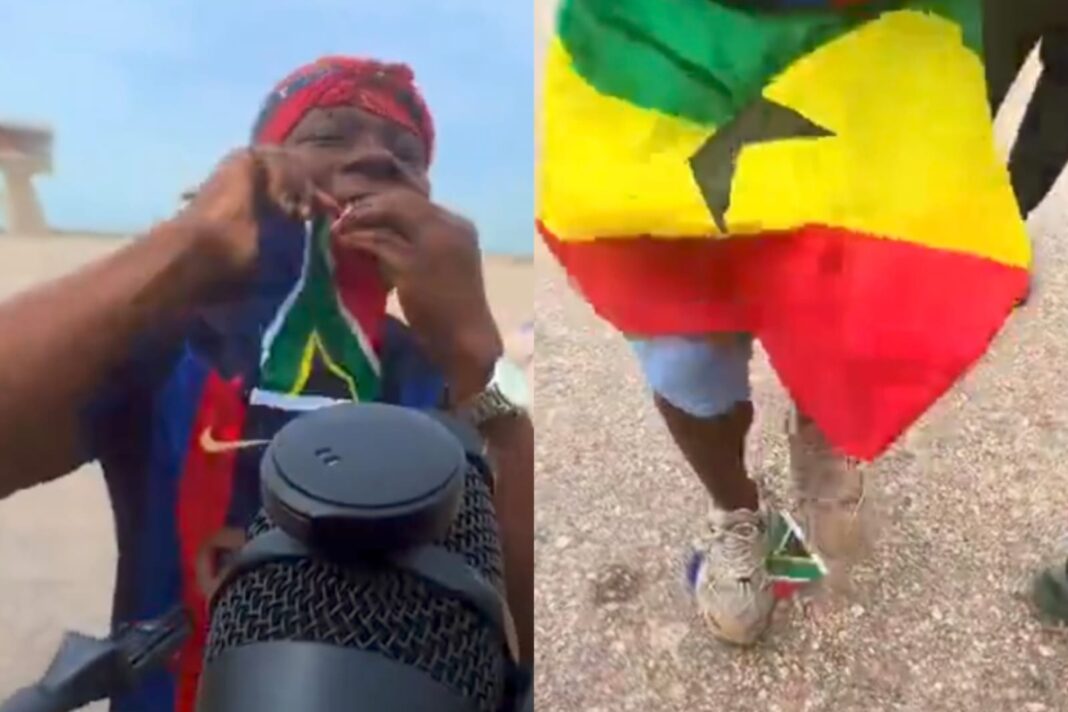

South Africa is facing growing backlash across Africa as rising xenophobia, anti-migrant protests and repatriations damage the country’s image on the continent.
From Ghana and Nigeria to Malawi and beyond, online conversations about “Mzansi” have increasingly shifted from admiration to anger, mockery and criticism. Viral clips, memes and commentary now regularly frame South Africa as one of Africa’s most controversial talking points.
But beneath the online trolling lies a more serious issue: the treatment of foreign African nationals in South Africa and the growing perception that xenophobia has become normalised in parts of the country.
Anti-immigrant sentiment has intensified in recent months, with groups staging protests and campaigns targeting undocumented foreign nationals.
Migrant communities have reported growing fear, while several African governments have faced pressure to respond as their citizens become caught up in the crisis.
Recent reporting said hundreds of migrants have been repatriated amid rising tensions, with further departures expected as anxiety grows ahead of planned anti-immigrant demonstrations.
The situation has created uncertainty for many foreign nationals living and working in South Africa, particularly in informal settlements, townships and high-density urban areas where migrant communities are often exposed to harassment, intimidation and violence.
South African officials have acknowledged that the crisis is no longer only a domestic matter. The country’s reputation across Africa has taken a hit, with political, cultural and economic consequences.
One of the clearest signs of this fallout has been the reported impact on South African artists. According to recent reports, some performers have lost opportunities elsewhere on the continent as promoters and organisers reconsider bookings due to anger over xenophobia in South Africa.
The backlash shows how anti-migrant hostility is no longer contained within South Africa’s borders. It is now shaping how the country is viewed by its African neighbours and influencing conversations around culture, business, diplomacy and regional solidarity.
Across social media, that perception has hardened into a broader narrative in which South Africa is increasingly criticised and mocked by fellow Africans who once viewed it as a symbol of post-apartheid progress.
The shift is stark. It reflects a growing disconnect between South Africa’s regional image and its internal social realities, including unemployment, inequality, crime, poor governance and pressure on public services.
At the heart of the debate is a difficult question: has South Africa brought this backlash upon itself, or is the criticism from fellow Africans an oversimplification of a complex crisis involving migration, poverty and state failure?
What is clear is that xenophobia in South Africa is no longer a contained national issue. It has become a continental conversation, one that is reshaping perceptions and redefining South Africa’s place in the African imagination.