
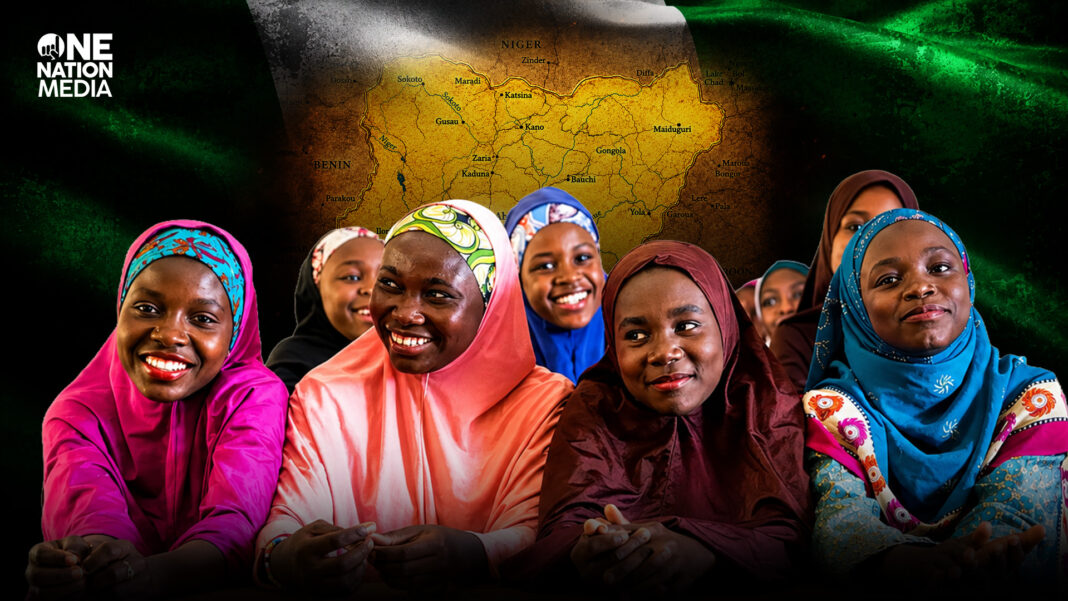

The hijab is often presented as a symbol of oppression, extremism or social incompatibility. Yet in societies that constantly preach freedom, autonomy and self-expression, the real contradiction lies elsewhere: why are Muslim women still being punished, excluded and policed for choosing to visibly practise their faith, writes Nusrat Lasisi.
As Nigerian university aspirants prepared for the Joint Admissions and Matriculation Board (JAMB) examinations, unofficial guidelines began circulating across WhatsApp groups created for candidates. Among the list of “dos and don’ts” was a quiet but revealing instruction regarding dress code:
“Caps/hats not allowed (except for religious reasons, and not every centre will even consider that). Please adhere to the rules to avoid embarrassment.”
Though unofficial, the warning proved prescient. When examinations commenced between April 16 and April 25, 2026, reports emerged of Muslim candidates allegedly being asked to remove their hijab before being allowed entry into examination halls.
At Esther Oshikoya CBT Centre in Ibadan, Oyo State, a Muslim candidate was reportedly compelled to remove her veil or forfeit the examination altogether. Security personnel claimed they were acting on instructions, despite both constitutional protections for religious freedom and JAMB’s own allowance for hijab.
The incident once again raised a recurring question: in a world that constantly celebrates freedom of choice and self-expression, why is the hijab still treated with suspicion, hostility and, at times, outright exclusion?
The contradiction of ‘choice’
This incident is not without precedent. In 2017, Amasa Firdaus Abdulsalam was denied entry into the International Conference Centre in Abuja for her Call to Bar ceremony because she chose to wear her hijab beneath her wig. It took sustained public pressure before she was eventually called to the Bar in 2018.
Nearly a decade later, the policing of Muslim women’s dress in public spaces persists, often justified through arguments surrounding secularism, uniformity or security concerns. Yet these justifications become increasingly difficult to sustain in an era dominated by biometric verification, surveillance systems and digital identification.
More importantly, these restrictions expose a wider contradiction. Contemporary societies consistently champion bodily autonomy and individual freedom, but those principles appear conditional when visibly Islamic expressions of identity enter the public sphere.
The justification most commonly cited in educational institutions is the prevention of examination malpractice or security threats. Yet it is difficult to argue convincingly that a piece of fabric poses a unique danger while deeper institutional and societal problems remain unaddressed and normalised.
The consequences extend beyond symbolism. Preventing women from accessing education, examinations or professional spaces because of religious dress forces many into an artificial choice between faith and participation in public life.
In a country already facing severe gender inequality, the implications are significant. According to reports published by African Liberty in September 2024, around 70% of Nigeria’s poorest population are women, with an estimated 52 million women living in extreme poverty. Policies and practices that marginalise visibly Muslim women risk deepening social exclusion rather than reducing it.
Digital hostility and manufactured perceptions
Beyond institutions, hostility towards the hijab is increasingly reinforced within digital spaces where misinformation, outrage and ideological tribalism thrive.
Across Nigerian social media platforms, conversations surrounding hijab and burqa often reveal how quickly religious expression becomes associated with backwardness, repression or extremism.
Recently on X, a user asked non-Muslims what came to mind when seeing a woman in a burqa approaching them. Thousands of responses followed, with many describing the garment as oppressive, anti-social or degrading.
Such reactions are not formed in isolation. Digital platforms like X financially reward sensationalism and emotionally charged engagement, encouraging simplistic and hostile narratives to spread rapidly. Through repetition, memes, viral commentary and misinformation, the hijab becomes framed not as a commitment to faith and modesty, but as a symbol of suspicion or social incompatibility.
In these environments, photographs of Muslim women are no longer viewed as ordinary images of people practising their faith. Instead, they become political objects onto which wider ideological anxieties and prejudices are projected.
A global pattern
This framing is not unique to Nigeria. In France, face coverings are banned under the justification of protecting “social cohesion,” “women’s dignity” and “gender equality.” In 2023, the French government also banned the wearing of the abaya in schools, claiming it violated secular principles.
Yet the contradiction remains difficult to ignore. How can a state claim to defend women’s freedom while simultaneously restricting what women are permitted to wear?
In India, hijab restrictions in educational institutions have similarly been defended using arguments around discipline, uniformity and order, while in the Xinjiang region of China (East Turkestan), Uyghur women are banned from observing hijab in government buildings.
Although these policies emerge from different political and cultural contexts, the underlying pattern remains remarkably consistent. The hijab is rarely treated as a legitimate expression of personal conviction or religious identity. Instead, it is framed as something requiring regulation, suspicion or containment.
Who defines ‘freedom’?
The irony is particularly striking in the modern age, where “choice” is often elevated as a sacred principle.
Movements centred around bodily autonomy and personal freedom dominate contemporary discourse, from abortion rights activism in the United States to wider global conversations surrounding identity, self-expression and individual agency. Slogans such as “My body, my choice” are defended as universal principles against external “patriarchal” control.
Yet Muslim women who choose to wear the hijab, abaya or burqa are frequently excluded from that same logic of autonomy.
In many societies, celebrities and influencers are celebrated for using fashion to communicate identity, politics or artistic expression. The issue is not that the hijab is comparable to celebrity fashion culture, but that visibly Islamic expressions of identity and modesty are often denied the legitimacy routinely granted to other forms of self-expression. For many Muslim women, the hijab is not merely cultural attire or a social accessory. It is an act of religious conviction, worship and identity. The treatment of that conviction as suspicious, regressive or incompatible with public life exposes the contradictions and hypocrisies embedded within the freedoms modern societies claim to defend.
Nusrat Lasisi is a Nigerian journalist and writer whose work explores gender, faith,politics and media narratives within communities. Her writing focuses on the intersection of religion, culture, gender and contemporary social discourse. You can follow Nusrat on LinkedIn.


Well said, our country celebrate nudity rather than modesty, may Allah continue to increase you in knowledge and understanding