


Captain Ibrahim Traoré’s recent address to the Forces Vives in Ouagadougou was more than another speech on Burkina Faso’s fight against terrorism. It signalled a tougher approach towards sections of the country’s Muslim religious leadership.
Through remarks concerning Imam Ishaq Kindo, Burkinabè students studying Sharia abroad, sermons described as “extremist”, and the promotion of what he termed “moderate Islam”, the Head of State indicated that the religious sphere has become a new front in Burkina Faso’s wider security strategy.
The case of Imam Kindo, who has been missing since his reported abduction in May, has become the clearest symbol of this shift.
Without naming him directly, Traoré referred to his arrest and the demonstrations that followed, accusing some religious leaders of misleading worshippers by claiming that the government intended to ban prayer.
The President insisted that the state’s objective was not to interfere with religious practice, but to regulate certain activities in the interests of public order and curb narratives that could encourage violent extremism.
The government has now openly embraced this position.
Traoré argued that a “minority of extremists” had helped facilitate the spread of terrorism in Burkina Faso. He announced plans to suspend preachers accused of promoting dangerous messages, financially support imams who advocate what he described as a moderate interpretation of Islam, and repatriate hundreds of Burkinabè students studying Sharia in certain Arab countries, claiming that some forms of overseas religious training may pose a national security risk.
The latest measures build on steps already taken by the government.
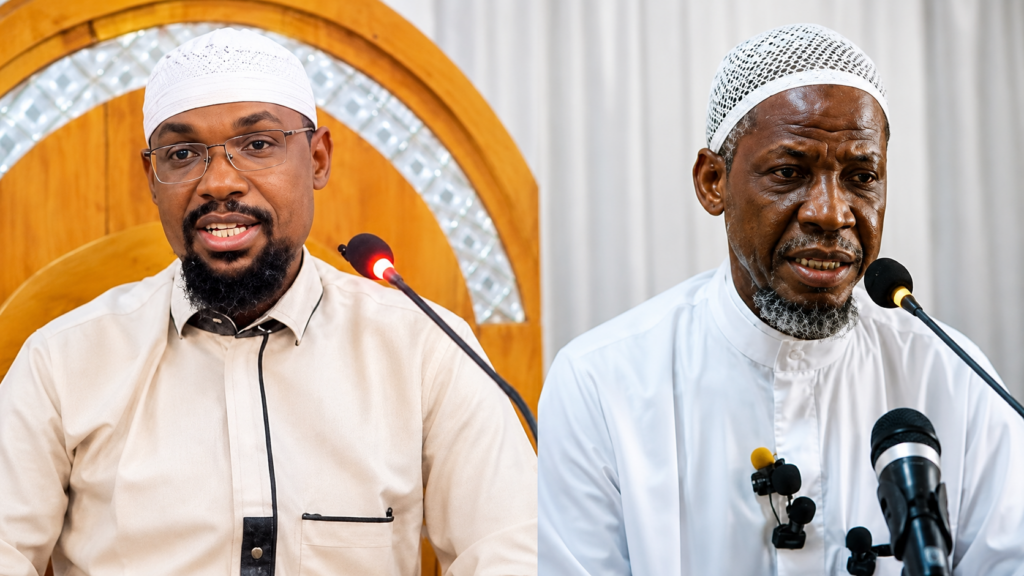
In June, authorities banned Muslim scholars Idrissa Sawadogo and Omar Sankara from preaching nationwide, citing concerns that their sermons promoted what officials described as radical ideas capable of undermining social cohesion and public order.
The move followed the passage of Burkina Faso’s controversial Religious Freedoms Law, which expanded state oversight of religious activities.
Counterterrorism enters the religious sphere
Traoré’s speech reflected a broader shift in state policy.
Rather than limiting the fight against armed groups to military operations, the government now appears intent on extending its counterterrorism strategy into religious spaces, where authorities believe extremist ideologies can take root.
Traoré further claimed that “imperialism” was seeking to exploit religion, particularly Islam, as a means of destabilising Burkina Faso.
His remarks have triggered sharply divided reactions across the country.
Burkinabè citizen Ismaël Dembélé warned against making religion a scapegoat for a crisis with far deeper political and social causes.
“When a country faces serious challenges, it is dangerous to make religion or Quranic schools the scapegoat,” he said.
Dembélé argued that coups d’état and constitutional violations in Burkina Faso cannot be explained by the study of Sharia or religious education received abroad.
Instead, he said the country’s priorities should remain protecting civil liberties, ending arbitrary abductions and restoring constitutional order.
Others have defended the President’s tougher stance.
Magistrate Ali Bamogo argued that neither religion nor ethnicity should be allowed to become an instrument of destabilisation. He said no religion or ethnic group was superior to another and maintained that only national unity could build a strong, sovereign and prosperous Burkina Faso.
His position broadly reflects the government’s view that national cohesion is central to defeating insecurity.
Fears of growing suspicion towards practicing Muslims
Among some religious leaders, however, concerns run much deeper.
One imam, speaking anonymously, said the President’s remarks appeared to move beyond counterterrorism and risked creating suspicion towards citizens simply because of their religious convictions.
He argued that the statements could be interpreted as casting doubt on Muslims whose faith forms a central part of their identity, regardless of whether they have any connection to violent groups.
The strongest criticism has come from human rights advocates and sections of civil society.
A Burkinabè activist known as “Blan Droit” accused the government of bypassing judicial procedures through the abduction of imams and other citizens who express critical views.
According to him, the Kindo case reflects a growing pattern in which security services increasingly override judicial safeguards. He argued that allegations of radicalism cannot substitute for due process or independent judicial rulings.
The controversy has therefore moved beyond the fate of Imam Kindo alone.
It raises a broader question confronting governments across the Sahel: how far can a state facing a genuine terrorist threat go in regulating religious affairs without undermining fundamental civil liberties?
Across the region, armed groups have exploited religious networks to recruit followers and spread their ideology. In that context, governments may regard greater oversight of religious preaching and the training of religious leaders as a legitimate preventative measure.
At the same time, such policies carry significant risks if they fail to distinguish clearly between violent extremism and the peaceful practice and propagation of Islam.
Critics warn that broad measures targeting religious institutions could foster mistrust and deepen feelings of marginalisation among sections of the Muslim community.
Imam Kindo
Imam Kindo’s continued disappearance remains at the centre of that debate.
For the government, the case has been framed as a matter of national security. For his supporters, however, his prolonged detention without transparent public judicial proceedings has raised serious concerns about due process, the rule of law and the protection of fundamental rights.
More broadly, the episode signals a new phase in Ibrahim Traoré’s governance.
Having consolidated much of his political and military authority, his administration now appears determined to exercise greater control over the religious sphere, viewing it as a strategic arena in both the fight against violent extremism and the preservation of political stability.