


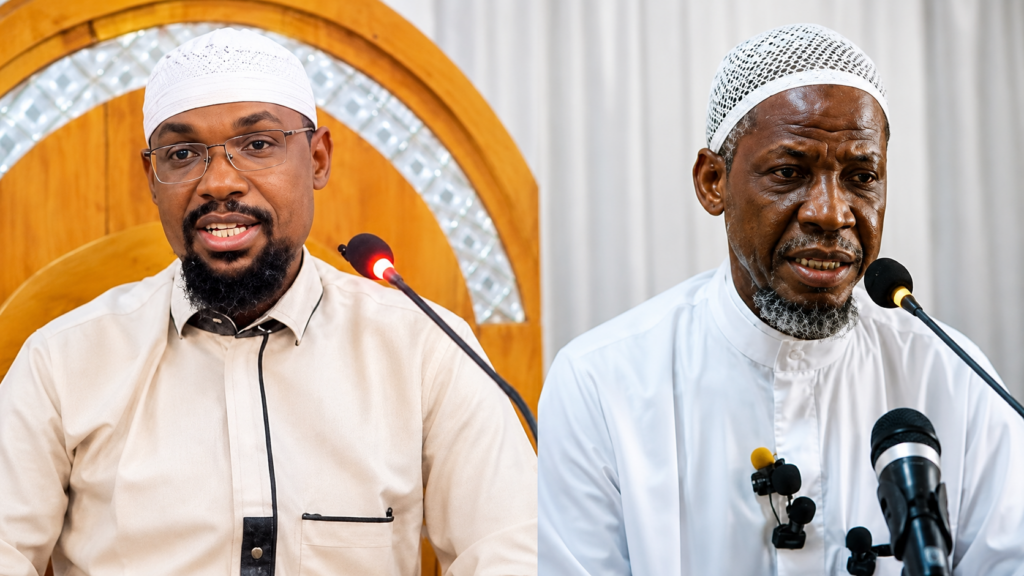
Just days after Burkina Faso adopted a controversial new law on religious freedoms, authorities have moved to enforce tighter controls by banning two Muslim religious leaders from preaching nationwide and suspending a faith-based organisation.
The measures have reignited debate over the balance between maintaining public order and protecting religious freedom in a country facing insecurity and social tensions.
Last week, Minister of State for Territorial Administration and Mobility Émile Zerbo signed two ministerial orders prohibiting Omar Sankara and Idrissa Sawadogo from engaging in preaching, religious teaching or related activities anywhere in Burkina Faso.
Under the first order, Omar Sankara, a 41-year-old preacher from Ouagadougou, was barred from all preaching and religious teaching activities until further notice. Authorities accuse him of making “radical statements” deemed likely to undermine social cohesion and peaceful coexistence.
A similar measure was imposed on Idrissa Sawadogo, 53, from Bokin Song-Naba, who is accused of delivering messages considered harmful to social harmony.
According to several accounts from followers, both preachers had recently criticised what they described as government “intimidation” of Muslims and called on authorities to give greater consideration to Islam in the conduct of public affairs.
The government maintains that the restrictions form part of a broader effort to curb extremist tendencies and strengthen oversight of messages delivered in places of worship.
In a separate decision issued days earlier, authorities suspended the religious association Tabernacle des fils du Royaume du Saint-Esprit for an initial period of three months, subject to renewal.
The organisation, officially recognised since May 2020, is accused of failing to renew its governing structures and is also facing allegations of moral misconduct and money laundering.
The government’s actions have generated mixed reactions across Burkinabè society.
Mouhamad Gansonré, an Arabic language teacher, said state decisions on sensitive matters were likely to provoke differing opinions among citizens.
“In a society governed by the rule of law, everyone has the right to express their views and, where necessary, raise concerns through the appropriate channels,” he said.
Imam Salifou Sawadogo urged caution, saying the exact allegations against the individuals were not yet fully known.
“As we do not know the exact allegations brought against these individuals, we cannot comment further on the matter. I therefore encourage everyone to prioritise forgiveness, dialogue and honesty,” he said.
For Inoussa Kindo, a certified Arabic language teacher at secondary school level, transparency remains essential.
“The authorities must clearly explain the reasons behind their decisions so that citizens can better understand them. They must also ensure that public trust is maintained. If some individuals are sanctioned for certain statements while others make similar remarks without facing consequences, it becomes difficult to understand. Any regulatory framework must apply equally to everyone, without discrimination,” he said.
The latest measures come amid a broader effort by the transitional government to strengthen the legal framework governing religious practice.
On 20 June, the Transitional Legislative Assembly unanimously adopted a new law on religious freedoms, granting the state expanded powers to regulate religious activities.
Earlier this month, prominent imam and preacher Dr Ishaq Kindo was reportedly detained after criticising the new religious freedoms law. Several of his followers were also arrested, while the country’s main Sunni mosque was closed indefinitely over concerns related to public order.
Through this series of decisions, the government appears determined to reassert control over a religious sector that has become an influential social and political force.
Beyond the sanctions imposed on specific individuals and organisations, the latest developments underscore a broader challenge facing Burkina Faso: how to reconcile the constitutional right to freedom of worship with the demands of security and national cohesion in a country facing persistent insurgency and deepening social strains.