

By Mxolisi Ncube
Mxolisi Ncube responds to Zingisa Mkhuma’s commentary, praising her for capturing the frustration of many South Africans who believe the promise of the democratic “Rainbow Nation” is slipping away, while arguing that South Africa’s migrant crisis should be understood through data rather than division.
Her article reflects the anger and despair experienced by millions, particularly the poor and working class, who continue to face high unemployment, deep inequality, overstretched public services and persistently high levels of crime.
These social pressures have reached boiling point. Exploited by populist political actors and pressure groups such as March and March, they have contributed to growing hostility towards undocumented migrants, who are often blamed for the country’s worsening socio-economic conditions.
However, Mkhuma’s analysis leaves unanswered a fundamental question: if every undocumented migrant were removed from South Africa tomorrow, would the country’s problems disappear? The answer, based on available evidence, is no.
The central weakness in arguments that place undocumented migration at the heart of South Africa’s crisis is the absence of a scientific analysis of the country’s objective socio-economic conditions.
The evidence overwhelmingly suggests that blaming South Africa’s broader challenges primarily on undocumented migration is a gross oversimplification of complex and longstanding structural problems.
At the heart of these challenges lies an economy that, more than three decades after democracy, remains deeply shaped by the inequalities and spatial distortions inherited from apartheid.
Understanding the numbers
Official data from Statistics South Africa provides important perspective.
According to Census 2022 and subsequent demographic estimates, South Africa’s immigrant population, including both documented and undocumented migrants, is estimated at between 2.4 million and 3.1 million people, representing around 5.1% of the total population.
These figures differ substantially from widely circulated but unverified claims suggesting that South Africa hosts as many as 15 million undocumented migrants.
By international standards, South Africa’s migrant population remains broadly comparable to, or lower than, many global and regional averages.
This does not mean concerns around migration are illegitimate. Porous borders, weaknesses in the asylum system and shortcomings in immigration enforcement remain serious policy challenges.
Deportations have also increased in recent years, with authorities removing more than 100,000 undocumented individuals during recent financial years under the Government of National Unity, reflecting intensified enforcement despite significant financial costs.
Yet many analysts argue that mass deportation alone is unlikely to provide a sustainable solution. As long as conflict, political instability and economic hardship continue to affect neighbouring countries, many deported migrants are likely to return through irregular channels.
Claims that migrants are overwhelmingly responsible for collapsing public services or denying South Africans access to housing, healthcare and education are also not fully supported by verified demographic data.
Crime and perceptions
South Africa continues to experience some of the highest levels of violent crime in the world. Organised crime, gang violence and drug trafficking remain major concerns.
These problems are driven by multiple factors, including poverty, inequality, unemployment, weak policing, corruption and historical socio-economic exclusion.
There is no doubt that some foreign nationals are involved in criminal activity, including organised crime networks. Law enforcement agencies have reported elevated arrest rates among non-nationals in certain crime categories and geographical hotspots.
However, comprehensive national data does not support the claim that migrants are the primary drivers of crime.
Foreign nationals constitute an estimated 7% to 15% of South Africa’s prison population, depending on the year and source consulted. While this may exceed their share of the general population, the overwhelming majority of convicted offenders in South African prisons are South African citizens.
Low detection and conviction rates for serious crimes, often below 25% for offences such as murder and aggravated robbery, also make definitive nationality-based conclusions difficult.
Research by organisations such as the Institute for Security Studies has consistently found no strong evidence that migrants are responsible for the majority of crime nationally.
High-profile crimes involving foreign nationals often receive extensive media coverage, shaping public perceptions. Social media narratives and community experiences further reinforce these views.
Nevertheless, official statistics indicate that crime in South Africa is fundamentally a national crisis requiring improved policing, stronger intelligence capabilities and a more effective criminal justice system, rather than immigration enforcement alone.
Both South Africans and migrants continue to be victims of crime, including during outbreaks of xenophobic and Afrophobic violence.
Pressure on public services
There is little dispute that South Africa’s public services are under severe strain.
Hospitals, schools, housing programmes and municipal infrastructure are all under pressure.
Research, however, suggests that these pressures stem primarily from historical backlogs, rapid urbanisation, internal migration, underfunding, corruption, mismanagement and governance failures.
Studies by the Organisation for Economic Co-operation and Development and the World Bank indicate that migrants often contribute positively to host economies. Evidence suggests that migrants typically show high labour-force participation, fill skills shortages in certain sectors and frequently create employment through entrepreneurship and self-employment.
Economic modelling has also suggested that immigration can contribute positively to GDP growth and generate multiplier effects within local economies.
Negative employment impacts may occur in particular low-skilled sectors or localities where competition is intense. However, most national-level studies find either limited or overall positive labour market effects.
South Africa’s unemployment crisis, currently hovering between 32% and 33%, predates recent migration patterns and is rooted primarily in structural economic weaknesses, poor educational outcomes and sluggish economic growth.
Statistics also show that migrants are disproportionately represented in self-employment and informal economic activity, particularly within the retail sector.
While this entrepreneurship contributes to local economies and service provision, it can also create tensions in oversaturated markets where competition for customers is fierce.
Understanding violence against foreign nationals
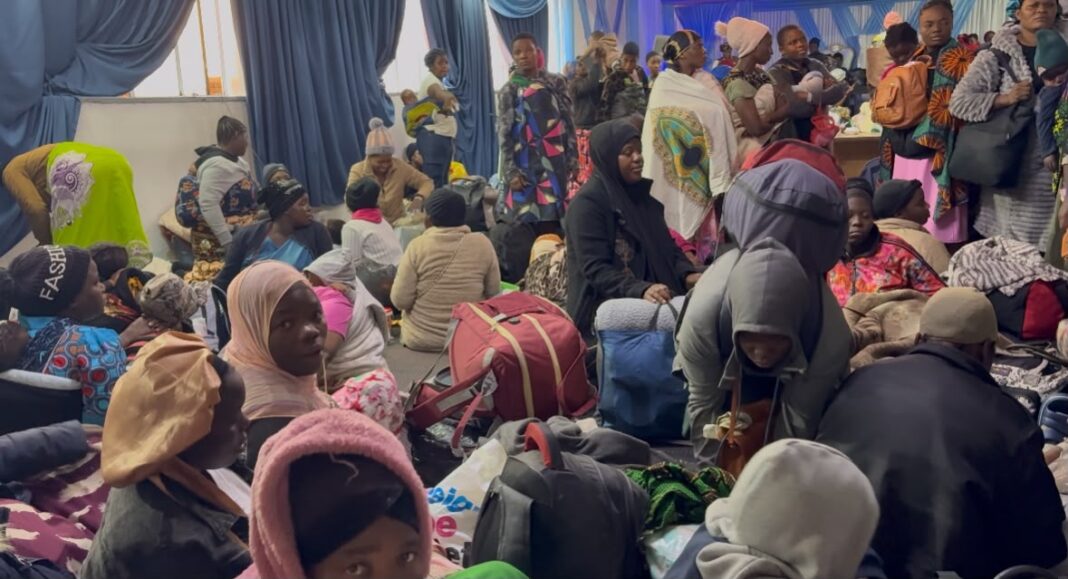
Violence directed at foreign nationals has recurred periodically since the advent of democracy in 1994.
Major outbreaks occurred in 2008, when more than 60 people were killed and thousands displaced, and again in 2015 and 2019. Each episode resulted in widespread displacement, destruction of property and significant economic losses.
Researchers have identified several underlying drivers, including socio-economic deprivation, perceived relative deprivation, frustration over poor service delivery, political mobilisation, weak law enforcement responses and longstanding social tensions.
Public opinion surveys show that many South Africans associate migrants with crime and job losses. However, these perceptions are often shaped more by anecdotal experiences and generalisations than by comprehensive national evidence.
Competition for scarce resources undoubtedly exists, particularly in impoverished communities. Yet evidence suggests that governance failures, socio-economic exclusion and opportunistic political mobilisation frequently play equally significant roles.
Most attacks have targeted African migrants living in townships and informal settlements, although South Africans have also been caught up in episodes of unrest.
Towards evidence-based solutions
South Africa’s challenges demand evidence-based policy responses rather than simplistic explanations.
These should include stronger border management, more efficient asylum systems, improved policing and intelligence capabilities, greater investment in public services, inclusive economic growth, skills-aligned migration policies and initiatives aimed at strengthening social cohesion.
The evidence shows that migrants contribute to South Africa’s economy through labour, entrepreneurship and skills, even as undocumented migration and criminal activity among a minority may place additional pressure on already strained systems.
Ultimately, the country’s socio-economic challenges are rooted primarily in domestic structural weaknesses, governance failures and an economic system that continues to reproduce many of apartheid’s inequalities.
Peaceful protest and demands for accountable governance are constitutionally protected rights. Violence against people solely because of their nationality, however, undermines both the rule of law and South Africa’s constitutional values.
Addressing poverty, inequality, corruption and institutional failure will benefit all who live in South Africa.
Data-driven policy, rather than mythologised narratives or scapegoating, offers the most sustainable path towards social cohesion, stability and shared prosperity.
Mxolisi Ncube is the editor and founder of African Voice Global.