

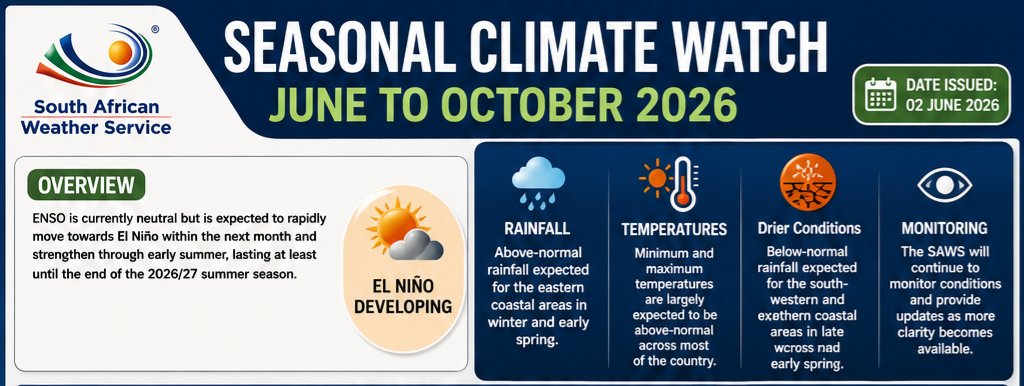
With an El Niño weather pattern expected to develop, water experts are warning that South Africa’s already strained water systems could come under further pressure during the summer rainfall season.
Climate forecasts indicate an 80–90% probability of El Niño conditions developing across southern Africa, a phenomenon typically associated with below-average rainfall, higher temperatures and an increased risk of drought in parts of the region.
Professor Anja du Plessis, a water management expert at the University of South Africa (UNISA), said a strong El Niño event could significantly worsen existing water challenges.
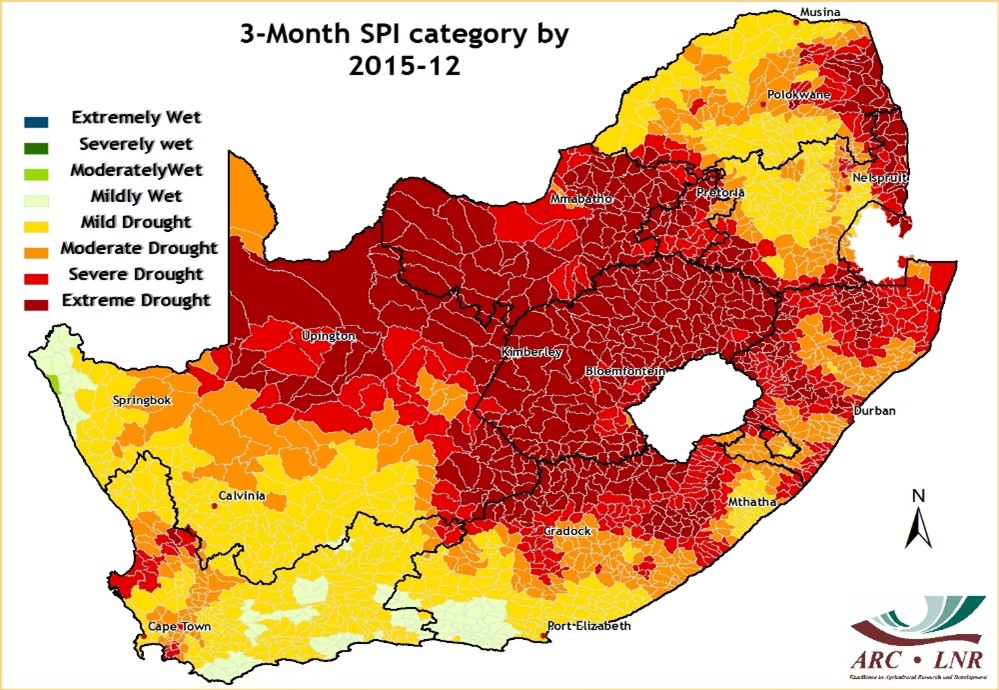
“If it is similar to the El Niño we experienced between 2015 and 2018, which contributed to severe drought conditions, it will exacerbate water issues, particularly as dam levels decline and rainfall becomes increasingly limited,” she said.
The previous El Niño cycle contributed to one of the most severe drought periods in recent South African history, placing pressure on water supplies, agriculture and local economies.
The warning comes as United Nations Secretary-General António Guterres cautioned that El Niño would “pour fuel on the fire of a warming world”.
Describing the phenomenon as an urgent climate warning, Guterres said it was arriving with “near-certainty” and would likely intensify extreme weather events across the globe.
He warned that rising global temperatures, combined with El Niño conditions, could result in more severe droughts, heatwaves and other climate-related disasters affecting millions of people.
Guterres said the international community’s response must include urgent climate action, accelerated investment in renewable energy, stronger protection for vulnerable communities and the expansion of early warning systems to help populations prepare for increasingly volatile weather conditions.