

Hezbollah lawmaker Hassan Fadlallah said Monday that no “one-sided” ceasefire would hold in Lebanon, stressing that there would be “no return” to the conditions that existed before March 2.
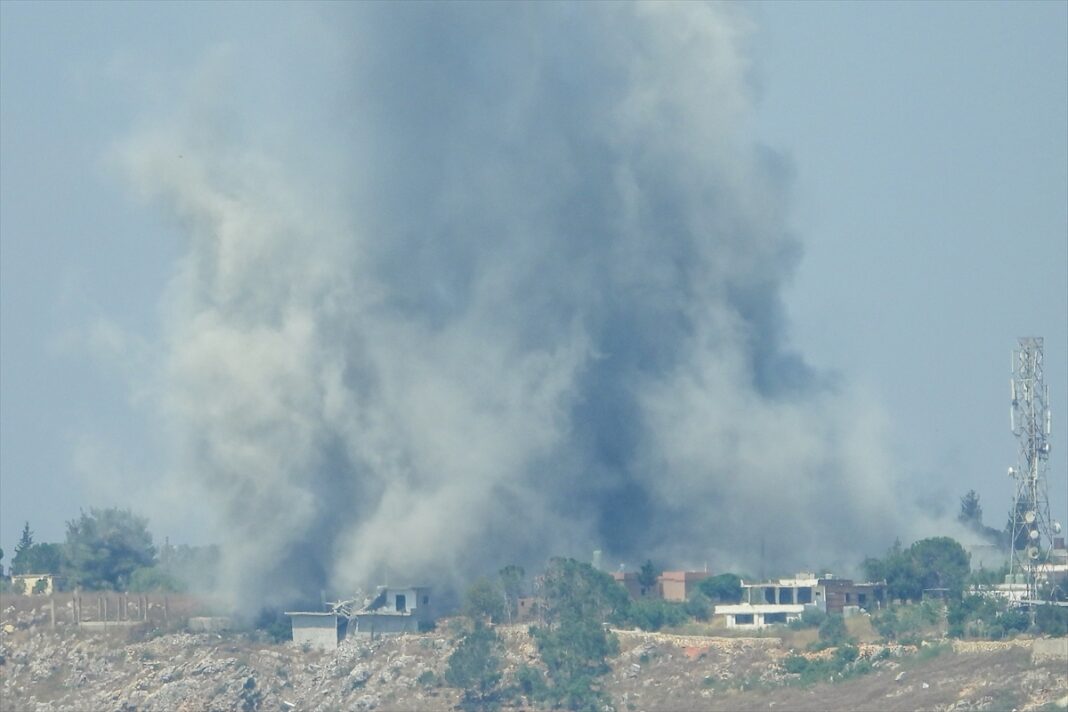
The statement comes as most UN Security Council members on Monday condemned Israel’s expanding military actions in Lebanon, while the United States unsurprisingly refrained from criticising Tel Aviv and instead directed its fire exclusively at Hezbollah and Iran.
Speaking to Hezbollah-affiliated Al-Manar TV, Fadlallah said the Lebanese position now centres on a comprehensive ceasefire, “by land, air, and sea,” as a necessary step toward Israeli withdrawal and the return of displaced residents to their villages.
He said the position had been conveyed to all parties and must include a “clear and explicit” Israeli commitment, as well as a halt to the destruction of homes in southern Lebanon.
Fadlallah added that Hezbollah would abide by any agreement once Israel commits to it, stressing that the group would not accept “one-sided” adherence to a ceasefire.
According to Fadlallah, Iranian pressure and threats to suspend talks contributed to changing the course of developments.
The remarks came after US President Donald Trump said on Monday that Israel and Hezbollah had agreed to halt attacks against each other following contacts through intermediaries.
Trump said he had held contacts through intermediaries with both sides and received assurances that “all shooting will stop.”
French UN envoy Jerome Bonnafont said they called for an emergency session “in response to the significant expansion of Israeli military operations in Lebanon.”
Bonnafont criticised Tel Aviv and warned that a new occupation would only deepen the conflict.
“Far from bringing security to Israel and its citizens, a new occupation risks only fuelling instability, because every village bombed and destroyed, every civilian killed strengthens Hezbollah and weakens the Lebanese executive,” he said.
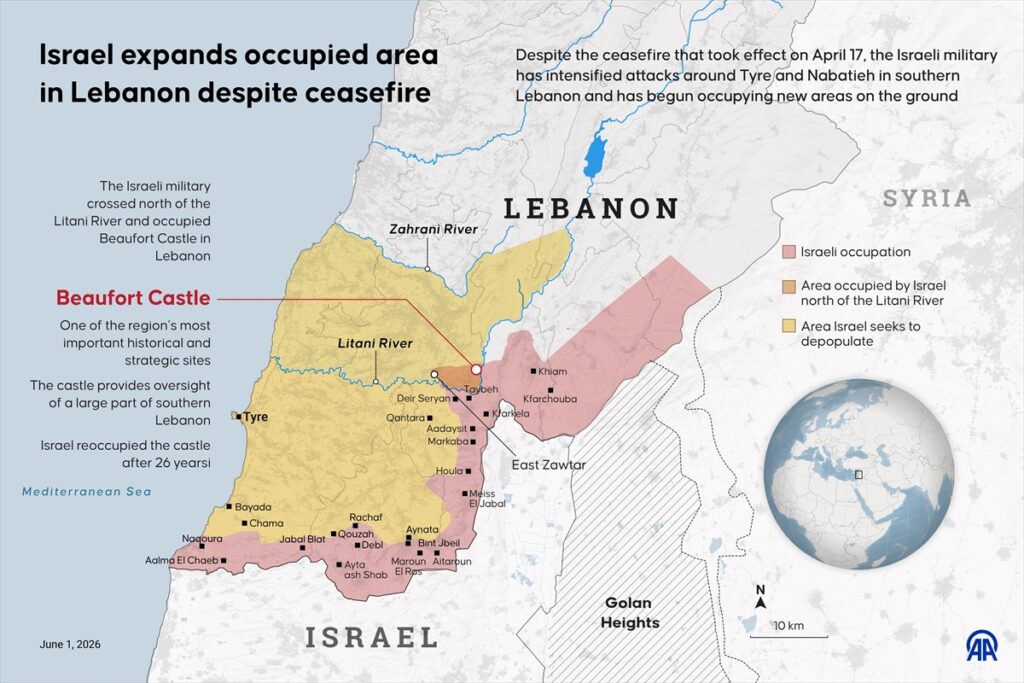
Meanwhile, the US stood alone to defend Israel’s major escalation currently underway in Lebanon when the UN Security Council met on Monday. Israel’s actions come despite the US-brokered ceasesfire signed on April 17th.
Russia’s UN envoy Vassily Nebenzia drew parallels between Israeli military acts in Lebanon and the situation in Gaza, saying Lebanon is seeing “an almost identical replay of the scenario of clearing the Gaza Strip with the establishment of large-scale occupation control and the forced displacement of the local population”.
He argued that “the deterioration of the situation in Lebanon was a direct result of the unjustified aggression by the United States and Israel against Iran”.
China’s UN envoy Fu Cong noted that Israel has “crossed the Litani River and occupied Balfour Castle,” calling it “Israel’s deepest military incursion in Lebanon in more than 20 years,” and said Israel’s stated plans to further expand ground operations are “deeply concerning to the international community.”
The UK’s Charge d’Affaires James Kariuki condemned what he called “reckless and disproportionate escalation of Israeli military action” that has “exacerbated an already devastating environment for Lebanese civilians.”
US envoy Mike Waltz offered a sharply different framing, crediting President Donald Trump’s personal leadership and placing the blame entirely on Hezbollah and Iran while making no mention of Israeli violations.
Israel has continued its attacks on Lebanon despite the truce that took effect on April 17, which was subsequently extended for 45 days following indirect US-mediated talks.
According to Lebanon’s Health Ministry, more than 3,400 people have been killed in attacks since March 2. – AA