
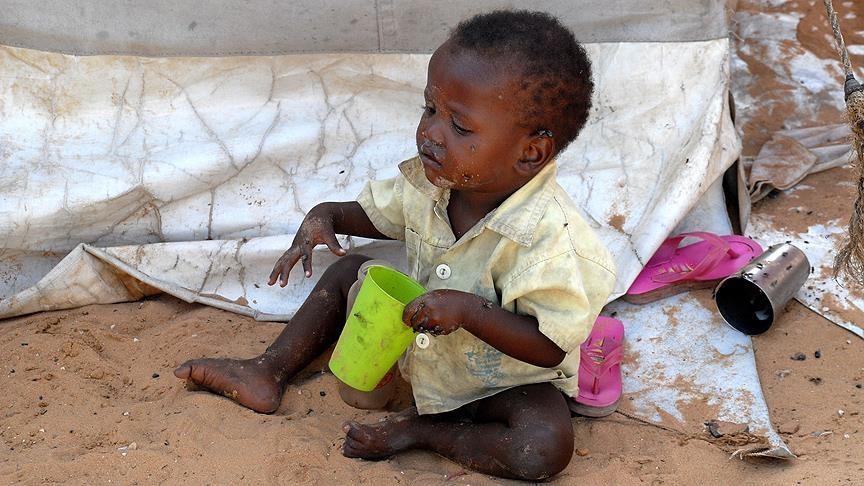

SA’s Department of Health releases shocking statistics on malnutrition, and the picture is no different in many other African countries. Amidst the gloom, there is hope as Muslim communities respond to the crisis
Food insecurity: Homegrown solutions
In a shocking revelation, the South Africa’s Department of Health has confirmed that close to 1000 children died of malnutrition in the past 18 months.
Further reports suggests one in four South Africans go hungry daily. Of the 21 million children in the country, 9 million are currently hungry.
Activists like Dr Busiso Moyo, of Union against Hunger, say they’re on a mission to change this.
“We are also concerned about the government’s inaction, perceived inaction insofar as showing leadership in this space and showing leadership of governing and intervening insofar as the food value chain is concerned.
“So, part of that would be us embarking on symbolic demonstrations, protest action, being involved in policy processes but more than anything else, trying to sensitise the South African state to take the issue of hunger as a matter of life and death.”
But not everyone is waiting on government to resolve the crisis. Some have started their own projects based on their belief in Islam to overcome hunger in our midst.
Food insecurity: A queue of desperation
The Al Falaah Mosque in Hillbrow, in the 20 years of its existence, is seen as an oasis in an impoverished community.
One of its lifelines to the local people is a Monday to Friday feeding scheme.
Food insecurity: Isa, the little gardener
Food insecurity is becoming a major social problem across South Africa and the continent. Hundreds of children go to bed hungry and suffer from life threatening malnutrition. However, there are still people in the country, in the true spirit of Hadith, trying to make a difference in a small corner of their homes.
Food insecurity: A view from the continent
In Nigeria, approximately 30.6 million people are facing acute food insecurity, with projections of this number increasing to 33.1 million during the 2025 lean season. This crisis is driven by economic hardship, high inflation, ongoing conflict, and climate change.
A significant portion of the population faces hunger, with nearly 1.8 million children at risk of Severe Acute Malnutrition (SAM).
A further 30.6 million people are currently facing acute food insecurity, a number projected to rise to 33.1 million during the 2025 lean season.
About 5.4 million children and nearly 800,000 pregnant and breastfeeding women are at risk of acute malnutrition, with 1,8 million children potentially facing Severe Acute Malnutrition (SAM).
The northeast of Nigeria is particularly hard-hit, with 2.3 million people displaced by violence and almost 5 million facing acute food insecurity in Borno, Adamawa, and Yobe states.
The northwest is also severely affected, with states like Zamfara, Sokoto, and Katsina showing high levels of food insecurity.
Record inflation rates (40.9% for food in June 2024) and soaring transportation costs are major drivers, making basic food items unaffordable. For example, the price of beans rose by 282% and local rice by 153% between October 2023 and October 2024.
Reduced foreign aid has significantly hindered the ability of organizations to provide life-saving assistance, particularly for child malnutrition treatment.