


ONM Reporter
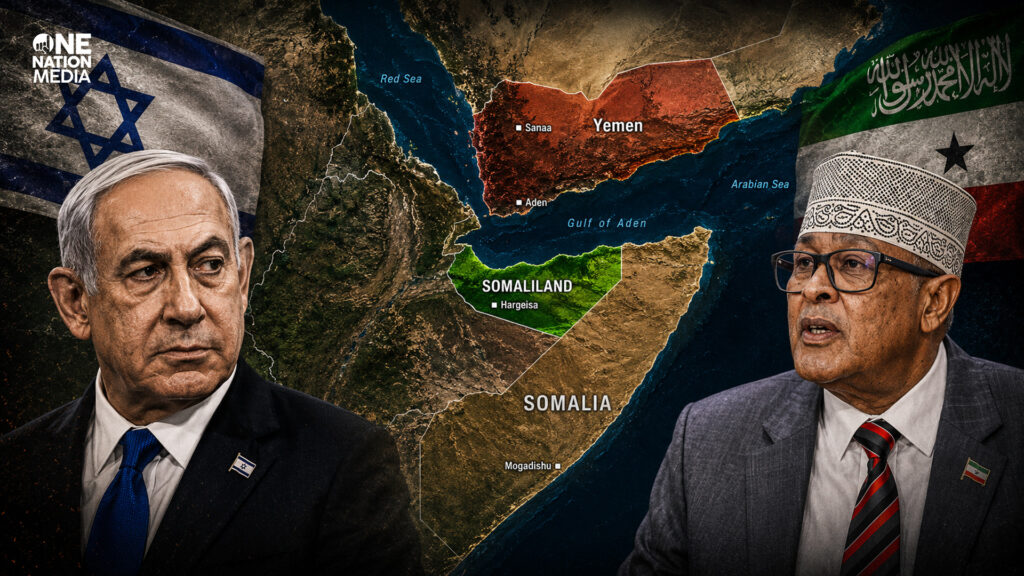
Israel’s recognition of Somaliland has raised serious concerns that Somalia and the wider Horn of Africa could be pulled deeper into the conflicts already reshaping the Red Sea and Middle East.
For Somalia, the move is not a normal diplomatic development. Mogadishu regards Somaliland as an inseparable part of the Somali state, despite the breakaway region operating as a self-governing administration since declaring independence in 1991.
Somalia has condemned Israel’s recognition as a direct violation of its sovereignty and territorial integrity. The African Union also continues to uphold Somalia’s internationally recognised borders and rejects unilateral attempts to redraw them. The timing of Israel’s move has added to the concern.
Israel is facing growing regional hostility over its genocide in Gaza, attacks on neighbouring states and recent military confrontation with Iran. At the same time, Israeli-linked shipping has come under pressure in the Red Sea, where Yemen’s Houthi movement has targeted vessels it says are connected to Israel.
Against this backdrop, Somaliland’s geography has become increasingly important.
The breakaway region sits along the Gulf of Aden, overlooking the Bab el-Mandeb Strait, one of the world’s most strategic maritime chokepoints. The route connects the Red Sea to the Gulf of Aden and the Indian Ocean, carrying a major share of global trade, energy shipments and goods moving between Europe and Asia.
For Israel, access to this area is not only about diplomatic recognition. It is about security, surveillance and strategic reach.
Israeli ambitions
Reports have suggested that Israel is seeking deeper security cooperation with Somaliland, including intelligence-sharing and possible access to facilities near the Red Sea. Other reports have alleged discussions around naval infrastructure and potential troop deployments.
Somaliland authorities have denied that talks are taking place over a permanent Israeli military base. Somaliland’s defence minister has said there is security cooperation, but no agreement for a permanent Israeli military installation.
Even without a formal base, intelligence facilities, logistical access or expanded security cooperation could give Israel a stronger position near the Bab el-Mandeb Strait and allow it to monitor developments across one of the world’s most sensitive waterways. The risk is that Somaliland becomes another point of entry for wider regional militarisation.
The Horn of Africa is already crowded with competing interests. Ethiopia, which lost its coastline after Eritrea’s independence in 1993, has been seeking access to the sea for decades. In 2024, Addis Ababa signed a memorandum of understanding with Somaliland aimed at securing access to the Port of Berbera, reportedly in exchange for possible recognition of Somaliland’s independence. Somalia rejected the deal, calling it a violation of its sovereignty.
Yemen and the Houthis
The UAE has also invested heavily in Berbera through DP World, helping develop the port into a major commercial hub. These investments have increased Somaliland’s strategic value at a time when regional and international powers are competing for influence across the Red Sea corridor.
Israel’s involvement adds another dangerous layer. Yemen’s Houthi movement has already warned that any Israeli military presence in Somaliland would be treated as a legitimate military target.
Houthi officials argue that Israeli forces operating near the Bab el-Mandeb Strait would threaten Yemen, Somalia and the wider Red Sea region.
Their warning reflects the broader reality: the Red Sea is no longer just a trade route. It has become one of the key theatres in the confrontation between Israel and its regional enemies.
For Somalia, the issue remains rooted in sovereignty. Recognition of Somaliland by foreign governments is seen in Mogadishu as an attempt to weaken Somalia’s territorial integrity and legitimise secession.
That is why Somalia has strongly opposed efforts by Ethiopia, Israel and other states to build formal relations with Somaliland outside the framework of the Somali state.
What was once treated as a local dispute over Somaliland’s status is now being pulled into a much larger geopolitical struggle involving Israel, Yemen, Ethiopia, the UAE and global shipping interests.
The concern for Somalia is that foreign powers are not approaching Somaliland as a neutral diplomatic issue. They are treating it as a strategic gateway to the Red Sea.
As Israel searches for new regional footholds and the Bab el-Mandeb becomes increasingly militarised, Somalia risks becoming another arena in a wider conflict. The recognition of Somaliland may therefore mark more than a diplomatic provocation. It could signal the opening of a new flashpoint in the Horn of Africa, with consequences extending far beyond Somalia’s borders.