


As freezing winter temperatures grip Durban, women are giving birth inside overcrowded tents surrounded by thousands of displaced migrants who fled their homes in fear of xenophobic violence.
At Sherwood Community Hall, where close to 10,000 foreign nationals, predominantly Malawians, have sought refuge after being forced from informal settlements across eThekwini, volunteers say newborn babies are entering the world under conditions no mother should have to endure.
Recognising the urgent need for medical assistance, Muslim doctors answered the call.
“We have an issue here where we don’t have doctors on site. A few children were born here unattended. Alhamdulillah, the Muslim doctors have come through for us,” Muslim Relief South Africa founder Cassim Malani told One Nation Media (ONM).
He said the Islamic Medical Association (IMA) has deployed doctors to the camp daily, treating children suffering from flu, monitoring pregnant women and providing much-needed medical care in an environment where illness can spread rapidly.

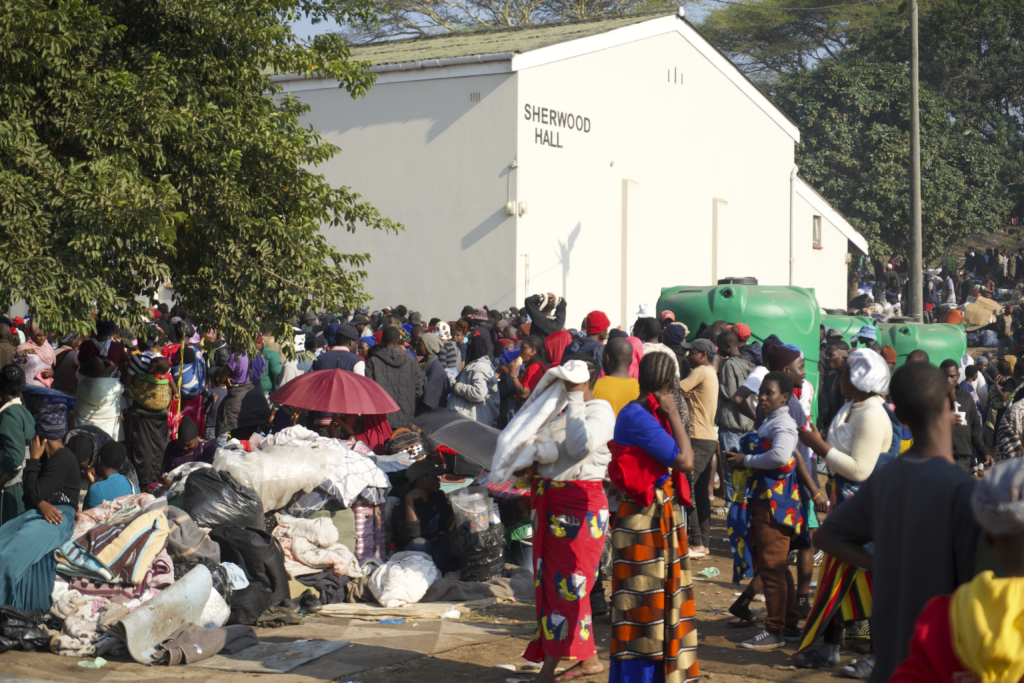
The unfolding humanitarian crisis has prompted members of Durban’s Muslim community to mobilise, providing food, shelter, medical care and dignity to families who have lost everything.
Beyond healthcare, Muslim charities and volunteers have mounted one of the largest community-led humanitarian responses seen in recent years.
Malani described the heartbreaking scenes confronting volunteers each day.
“We are in a very tight place at the moment. We have 10,000 refugees here that we didn’t expect to have,” he said.
He said the overcrowded conditions have created serious health risks.
“It’s inhumane to have these people here. We have no running water. We have no running systems where the toilets are working. People are getting sick in here. Children are being born in these tents, in inhumane conditions.”
The crisis erupted after thousands of migrants fled threats, intimidation and anti-foreigner protests that had intensified in parts of KwaZulu-Natal. The government has since begun processing undocumented migrants and setting up temporary immigration courts as deportation efforts continue.
Yet for humanitarian workers on the ground, the immediate concern is saving lives rather than debating immigration policy.
Organisations including the Al-Imdaad Foundation, Al Ansaar Foundation, Human Aid and numerous private donors have been supplying hot meals, blankets, tents and essential provisions.
“We are feeding 10,000 people three meals a day, which is a mammoth task,” Malani said.
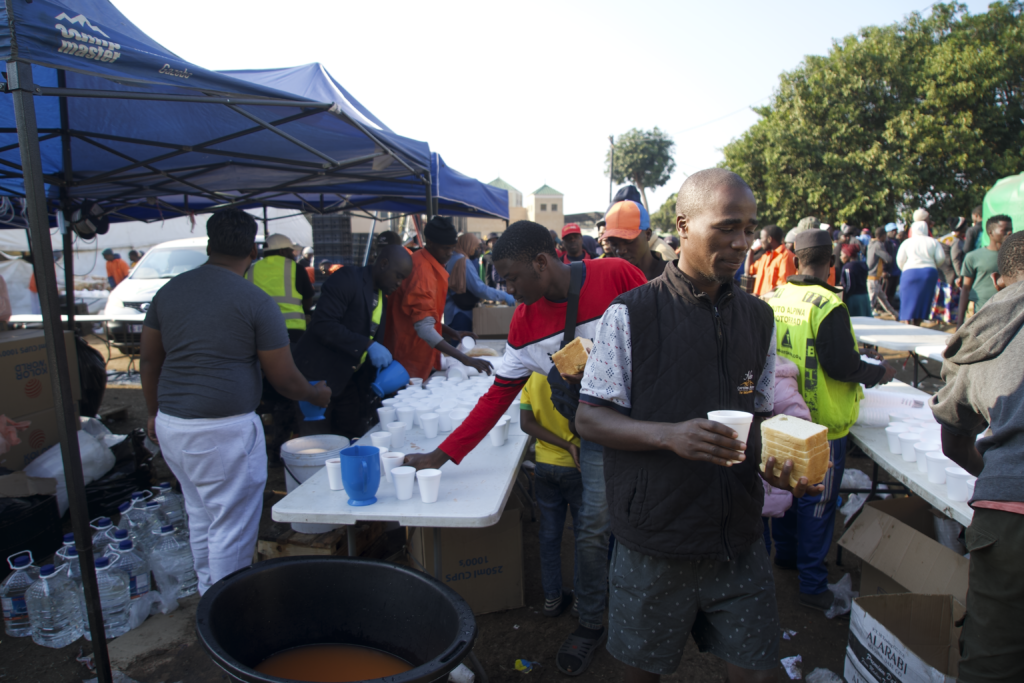
Volunteer Muhammad Suhail Sheikh told One Nation Media (ONM) that the response continues to rely heavily on ordinary people giving their time.
“There are over 10,000 Malawian brothers and sisters that need our help and we don’t have the manpower. Anyone that’s free and willing to volunteer, please come and find us.”
Another volunteer, Naseem Sheikh, said the migrants who arrived at Sherwood were not seeking charity but protection.
“These people came with babies. They came with women who had very little belongings with them. There was no shelter here,” he told One Nation Media (ONM).
As news of their plight spread, the surrounding community responded.
“People started pouring in with whatever they could: water, food, rice, beans and canned goods.”
For Sheikh, the response reflects a deeply rooted Islamic obligation to care for those in need.
“It is important for every community to assist. The Muslim community has always been in the forefront of giving and assisting wherever there is need.”
While the government works to process those gathered at Sherwood and determine their future, aid workers say their focus remains on preserving life and restoring dignity.
For the newborn babies taking their first breaths inside canvas tents, they hope the compassion shown by strangers will become the first chapter of a story that ends far differently from how it began.