


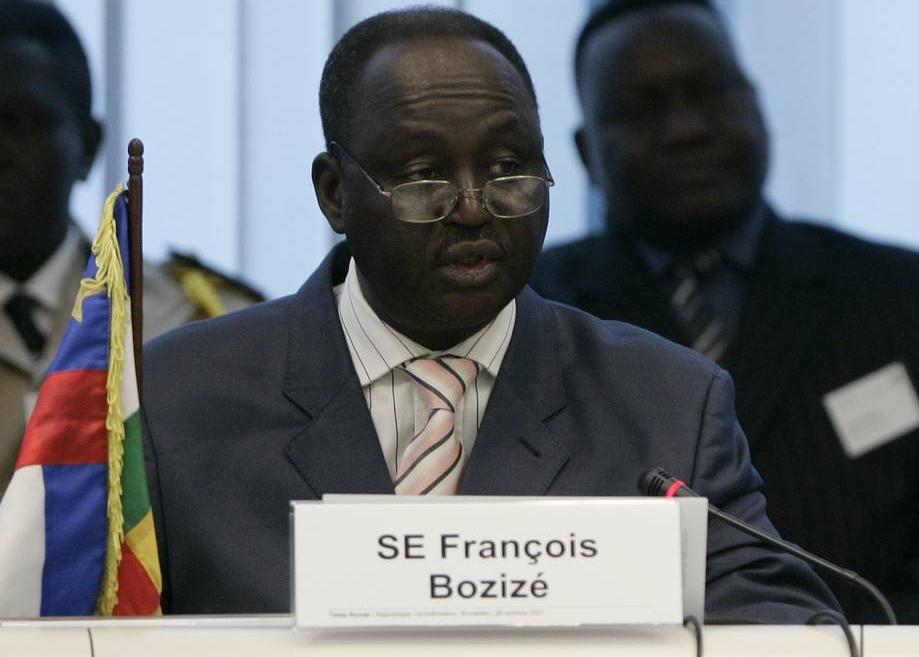
Former Central African Republic (CAR) President François Bozizé is standing trial in absentia before the UN-backed Special Criminal Court (SCC) in Bangui on charges of crimes against humanity, in a landmark case that has reopened painful memories of one of the country’s darkest chapters.
Bozizé, who has been living in exile in Guinea-Bissau, is being tried alongside three former senior military officials: former Defence Minister Jean-Francis Bozizé, former Chief of Staff General Antoine Gambi, and former Inspector General of the Armed Forces General Bruno Dacko.
Prosecutors allege that members of the Presidential Guard committed crimes against humanity between 2009 and 2013, including murder, torture, rape, enforced disappearances and other inhumane acts at Bossembélé prison and a military training facility.
While the trial focuses on alleged crimes committed during Bozizé’s presidency, it has also renewed scrutiny of the violence that engulfed the country after his overthrow in 2013, a conflict that disproportionately devastated CAR’s Muslim population.
Sectarian violence
Bozizé was removed from power in March 2013 by the predominantly Muslim Seleka rebel coalition after years of political instability and armed conflict.
His removal triggered a rapid collapse into violence that increasingly took on a sectarian character. Political grievances soon became intertwined with religious identity, turning ordinary civilians into targets.
The predominantly Christian Anti-balaka militias that emerged after Bozizé’s fall initially portrayed themselves as community defence groups. Human rights organisations, however, documented how many of these factions evolved into armed movements responsible for widespread attacks against Muslim civilians.
In large parts of western CAR, Muslim identity alone became grounds for persecution.
Entire communities were uprooted. Men and boys were killed in mass attacks. Homes and businesses were looted and burned. Mosques were destroyed, in some cases while worshippers were still inside.
In Bangui, Muslim-majority areas such as PK5 and PK12 came under siege, with residents cut off from food supplies, medical assistance and safe passage before many were forced to flee.
According to the Islamic Military Counter Terrorism Coalition (IMCTC), sustained Anti-balaka attacks displaced tens of thousands of Muslims, many of whom sought refuge in neighbouring Chad and Cameroon. The exodus permanently altered the demographic landscape of parts of the country.
The United Nations has previously warned that aspects of the violence directed at Muslim communities bore the hallmarks of ethnic and religious cleansing.
Seeking accountability
More than a decade later, efforts to hold perpetrators accountable continue.
At the International Criminal Court (ICC), former Anti-balaka leaders Patrice-Edouard Ngaïssona and Alfred Yekatom, widely known as “Rambo”, were convicted of war crimes and crimes against humanity for their roles in attacks targeting Muslim civilians.
The convictions included charges related to murder, torture, persecution and the destruction of mosques. Ngaïssona received a 12-year sentence, while Yekatom was sentenced to 15 years in prison.
Within CAR, domestic courts have also secured convictions against senior militia figures. Among them is Rodrigue Ngaïbona, known as “General Andjilo”, who received a life sentence for crimes linked to attacks on Muslim communities.
These prosecutions have been welcomed by human rights groups as important steps towards accountability, although many survivors believe justice remains incomplete.
A legacy still felt today
Although the current SCC proceedings centre on alleged crimes committed by Bozizé’s Presidential Guard before 2013, the trial has inevitably placed his wider political legacy under renewed examination.
Amnesty International has described the case as a significant milestone in the fight against impunity, while emphasising that accountability must extend to all parties responsible for atrocities committed during the conflict.
For many Muslim survivors, the proceedings are about more than legal responsibility. They are a reminder of communities shattered by violence, families separated by displacement and neighbourhoods that have never fully recovered.
More than a decade after the conflict reached its peak, many of those forced to flee have yet to rebuild their lives. The scars of sectarian violence remain visible across the country, and memories of what was lost continue to shape relations between communities.
As the trial unfolds in Bangui, it represents one of the most significant attempts yet to confront the Central African Republic’s violent past. For victims and survivors, it is also a test of whether justice can help heal wounds that remain painfully open.