


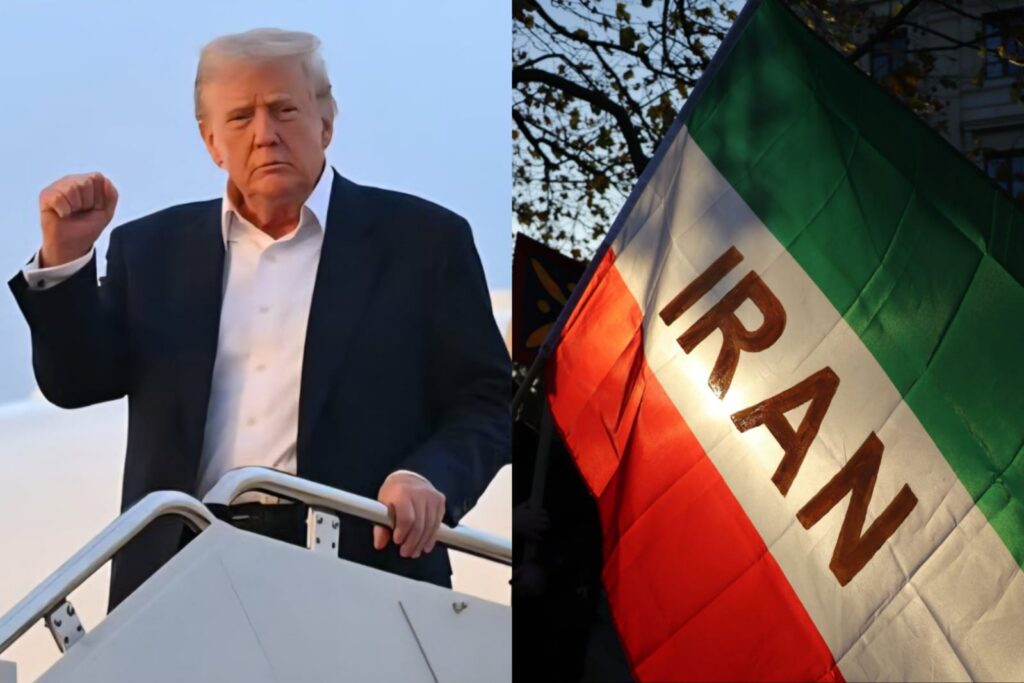
Iranian media published details on Monday of a 14-point draft memorandum of understanding between Iran and the US laying out a proposed framework to end the war and move toward a final agreement.
The semi-official Mehr News Agency said the draft calls for an immediate and permanent halt to the war on all fronts, including Lebanon, the lifting of the US naval blockade against Iran, the reopening of the Strait of Hormuz and a 60-day negotiation period covering nuclear issues and sanctions relief.
The reported draft comes after Iran said the memorandum of understanding had been finalised and would be formally signed on Friday in Geneva, while US President Donald Trump said a deal with Iran was complete and announced the reopening of the Strait of Hormuz and the “immediate removal” of the US naval blockade.
Trump may have found a way to exit from an unpopular war, but it seems he has settled for a deal that appears short of many of the goals he outlined in the early days of the conflct.
End of war, US commitments
According to Mehr, the draft calls for an immediate and permanent end to the war on all fronts, including Lebanon.
It also includes a US commitment not to interfere in Iran’s internal affairs and to respect the sovereignty of the Islamic Republic.
The draft further requires the US to withdraw its forces from around Iran and refrain from deploying additional troops to the region or imposing new sanctions during the negotiation period.
Hormuz reopening, blockade lifting
The draft provides for the full lifting of the US naval blockade against Iran within 30 days.
It also calls for reopening the Strait of Hormuz within 30 days under Iranian arrangements.
Mehr said the draft includes a monitoring mechanism to oversee implementation of the agreement.
Sanctions relief, frozen assets
The draft provides for the suspension of sanctions on Iranian oil sales, petrochemical products and derivatives while granting Tehran full access to the financial proceeds.
It also calls for the release of $24 billion in frozen Iranian assets during the 60-day negotiations period, with half of the amount to be made available to Iran before the start of final talks.
According to the draft reported by Mehr, the final agreement would include the full lifting of US primary and secondary sanctions as well as the termination of relevant UN Security Council and International Atomic Energy Agency Board of Governors resolutions.
Nuclear talks, Iranian red lines
The draft sets a 60-day negotiation period to reach a final agreement focused on nuclear issues and sanctions relief.
It says Iran would reiterate its commitment under the Nuclear Non-Proliferation Treaty (NPT) not to produce nuclear weapons.
Mehr said the final negotiations would focus only on the fate of enriched material and enrichment activities, sanctions relief and the reconstruction of Iran’s economy.
The report added that Iran’s missile programme and support for resistance groups were “definitively” excluded from the final negotiation agenda.
Reconstruction plans, final agreement
The draft requires the US and its allies to present reconstruction plans for Iran worth at least $300 billion.
It also says the final agreement would be endorsed through a UN Security Council resolution.
Mehr reported that final negotiations would not begin before half of Iran’s frozen assets are released, sanctions on Iranian oil are suspended and the naval blockade is lifted.
Last-minute changes
Separately, Tasnim News Agency, citing an informed source, said late changes were introduced to the draft during the final hours of negotiations, including provisions related to administration of the Strait of Hormuz.
The source added that guarantees related to Lebanon’s sovereignty and territorial integrity were also included at the final stage and played a role in Iran not carrying out a planned response to Israeli strikes on Beirut’s southern suburbs.
Trump describes Netanyahu as a very difficult guy
During the interview with The New York Times, Trump said the deal was reached despite objections from Israeli Prime Minister Benjamin Netanyahu.
Israeli warplanes bombed Beirut’s southern suburbs early Sunday, killing at least three people and injuring 15 despite an ongoing ceasefire. Trump criticized Israel for the attack, saying it “should not have happened” when the US and Iran are nearing a peace deal.
“He’s a very difficult guy,” he said, referring to Netanyahu, “and to be honest with you, he should be very thankful to us for doing this. Because if Iran had a nuclear weapon, Israel wouldn’t be around for two hours”.- AA