


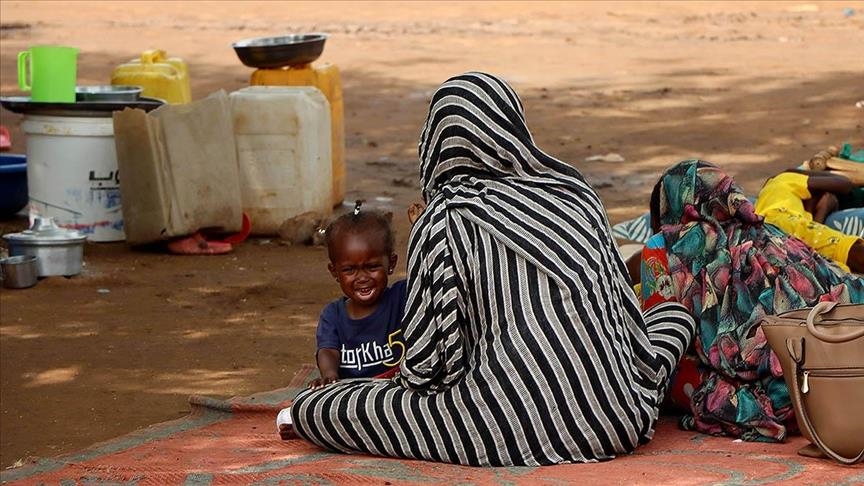
As bombs fall, families scatter, and entire communities collapse under the weight of war, one of the most devastating humanitarian crises of our time continues with little sustained global attention.
What is unfolding in Sudan is not a distant conflict. It is a mass displacement crisis, a hunger emergency, and a deep human tragedy that is reshaping the lives of millions.
Since the eruption of war on 15 April 2023 between the Sudanese Armed Forces (SAF) and the Rapid Support Forces (RSF), Sudan has been thrust into chaos. Entire cities have become unsafe, homes have been abandoned, and what was once a fragile yet functioning society has been driven into one of the most severe humanitarian crises in recent history.
Speaking to One Nation Media (ONM), Islamic scholar and imam at Al-‘Ashara Al-Mubashara Mosque in Rustenburg, North West Province, Mufti Khabbaab Mohamed described the crisis as one of the largest of our time, yet one that remains underreported and underacknowledged in proportion to its scale.
He noted that the magnitude of suffering in Sudan is comparable to that in Gaza when measured by displacement and humanitarian collapse, urging people to look beyond headlines and examine the raw figures that reveal a nation in distress.
“This is one of the largest crises of our time, yet it has not received the media attention that it deserves. The scale of suffering in Sudan is comparable to Gaza,” Mufti Khabbaab told ONM.
[Photo: Anadolu Agency]
A nation displaced
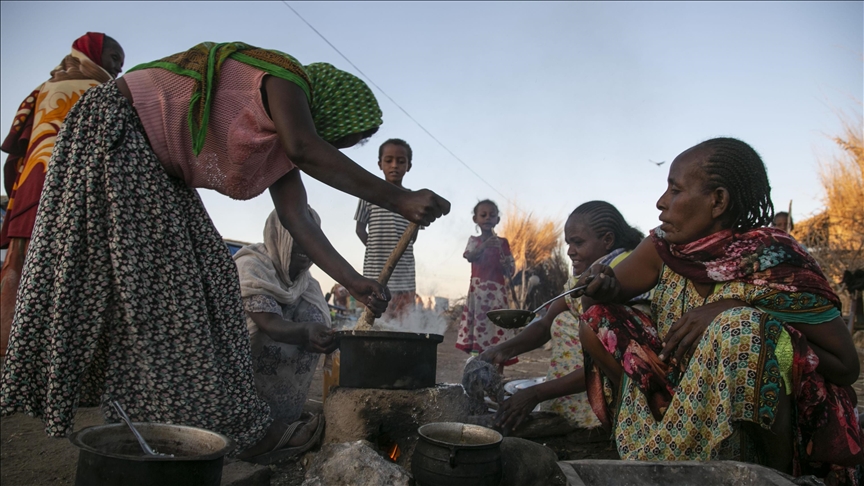
One of the most alarming dimensions of the war is the scale of forced displacement. Since the conflict began, approximately 14 million people have been uprooted from their homes. Of these, about nine million remain displaced within Sudan itself, while roughly five million have crossed into neighbouring countries, including South Sudan, Egypt, Libya and Chad.
These are not just numbers. They represent families torn apart, children growing up without stability, and entire communities stripped of their roots.
According to Mufti Khabbaab, this places Sudan at the centre of what may be the world’s largest displacement crisis today.
Hunger, collapse and survival
Beyond displacement, Sudan is also facing a deepening food insecurity emergency. Around 10 million people are struggling to access sufficient food, with approximately five million already pushed to extreme levels of hunger.
Basic services have collapsed in many areas. Healthcare systems are overwhelmed or non-functional. Clean water is scarce. Electricity is unreliable or absent in conflict zones. Education has been severely disrupted, leaving a generation uncertain about its future.

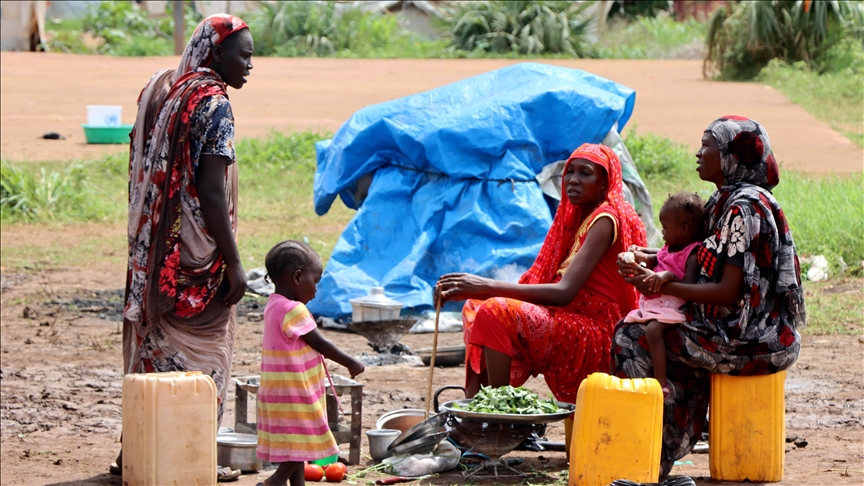
Mufti Khabbaab emphasised that the suffering is not abstract. It is lived daily by millions who are simply trying to survive in conditions that strip away dignity, safety and hope.
“In the most extreme phase of the hunger crisis, essential services such as healthcare, clean water, electricity and education have been severely disrupted.
In essence, the scale of human suffering is immense, while international attention remains limited compared to the severity of the crisis and situation in Sudan,” he said.
A war with complex layers
At the heart of the conflict lies a violent power struggle between the Sudanese Armed Forces and the Rapid Support Forces, once aligned but now deeply fractured. The SAF remains the recognised state military structure, while the RSF emerged as a powerful armed faction that later turned against it.
Mufti Khabbaab highlighted a critical dimension often debated among scholars and analysts: the role of external influence in prolonging the conflict. He expressed concern that foreign support to armed factions risks intensifying the war rather than resolving it, adding that such involvement only deepens Sudan’s suffering.
“Not forgetting, very important, that the external countries that are adding fuel to the war, such as the UAE,” he explained.
Without reducing the complexity of international relations, his core message centred on accountability, restraint, and the urgent need to stop the flow of support that fuels continued violence.
The human cost
The human cost of the war is staggering. Tens of thousands have been killed, with some estimates reaching as high as 200,000 lives lost since the conflict began.
Mufti Khabbaab’s reflection was rooted in a deep sense of moral urgency. He described the suffering of Sudanese civilians as unbearable, pointing to widespread reports of torture, persecution and displacement that have left communities traumatised and fractured.
Yet amid this devastation, he reminded viewers that the responsibility of the Muslim Ummah is not to turn away. Instead, it is to respond with awareness, compassion and tangible support.
A call to the Ummah
In his closing reflections, Mufti Khabbaab called on Muslims globally to recognise Sudan as a shared responsibility. He emphasised that beyond politics and borders lies a moral obligation to assist those enduring suffering.
He made du‘a for relief, asking Allah to lift the hardship from the people of Sudan, restore peace, and reunite the hearts of the Ummah in solidarity and mercy.
Sudan’s crisis is not new, but it is deepening. Every passing day adds layers of hunger, displacement and despair. Yet its visibility in global discourse remains limited compared to the scale of its devastation.
What remains clear is that Sudan is not only a geopolitical conflict. It is a humanitarian emergency of historic proportions. And for many, it is also a spiritual test of how the world responds when an entire nation cries out in silence.