


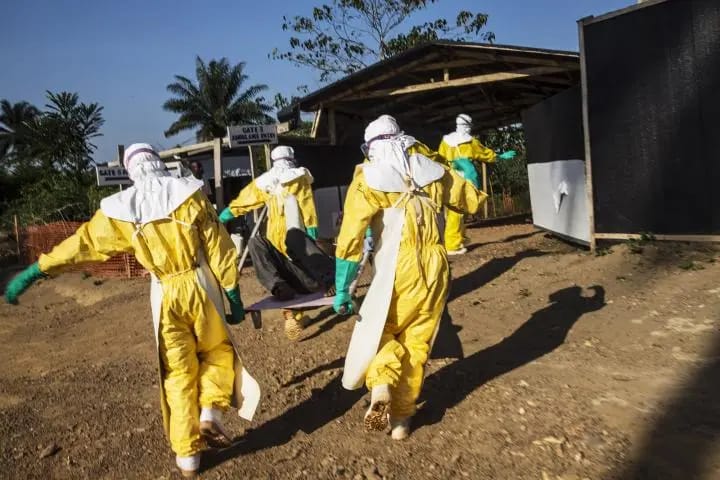
Health officials are warning that the Ebola outbreak in eastern Democratic Republic of Congo is becoming increasingly difficult to contain after the virus spread into new areas, including a crowded displacement camp.
The outbreak, which was declared on May 15, has been caused by the rare Bundibugyo strain of Ebola. According to DRC government figures, 689 cases have been confirmed so far, with 139 deaths.
The outbreak is centred in Ituri province, but infections have also been reported in North Kivu and South Kivu. The UN has also recorded 119 suspected cases.
The World Health Organisation (WHO) says the spread of the virus into new health zones is now being detected almost daily, raising concerns that the real scale of the outbreak may be far greater than official figures currently show.
Olivier le Polain, the WHO’s head of epidemiology and analytics, said the pattern of transmission reflected both the seriousness of the outbreak and the high movement of people across affected areas.
He said that while earlier cases in new areas could be traced back to travel from existing hotspots, local community transmission is now being seen in newly affected zones.
The WHO has warned that surveillance gaps, limited contact tracing and a lack of isolation space are making the response more difficult. Officials say bed capacity remains far below what is needed to safely isolate patients and slow the spread.
There are currently no approved vaccines or treatments for the Bundibugyo species of Ebola.
The situation has become more alarming after the UN refugee agency confirmed the first Ebola-related deaths in Kpanga displacement camp in Ituri province. An aid worker cited by Reuters said the deaths took place on May 31 and June 1.
Aid agencies fear the virus could spread quickly through overcrowded camps, where poor sanitation and limited facilities create ideal conditions for transmission.
DRC’s response has also been weakened by decades of conflict in the east of the country, where armed groups operate across mineral-rich regions and state control remains limited.
The violence has damaged infrastructure, displaced large numbers of people and made access to some high-risk areas difficult for health workers.
The outbreak has also raised concern in neighbouring Uganda, which has confirmed 19 cases and two deaths. However, the African Union’s health agency recently said the situation there was under control.