


For centuries, Western historical narratives have portrayed the Mediterranean as a battleground between “civilised Europe” and “Muslim pirates.” But this caricature could not be further from the truth, writes Neelam Rahim.
Popular culture, colonial literature and even some modern historical accounts have often presented the Barbary corsairs of North Africa as uniquely barbaric Muslim raiders who terrorised European shipping lanes out of religious fanaticism and greed.
But history tells a far more complicated story. Maritime conflict in the Mediterranean between the 16th and 19th centuries was not a simple case of “Muslim piracy.” It formed part of a wider geopolitical struggle involving empires, trade routes, naval warfare, slavery, colonial expansion and retaliation against European aggression.
Some of the most feared corsairs were not even ethnically North African or originally Muslim. Several were European converts, mercenaries, renegades or political exiles operating within Ottoman-linked naval structures.
A Mediterranean at war
To understand the Barbary corsairs, one must first understand the Mediterranean world of the time. The Mediterranean in the 1500s and 1600s was not a peaceful commercial zone disrupted by Muslim raiders. It was a heavily militarised sea dominated by competing empires. Spain, Portugal, Venice, Genoa, France, the Ottoman Empire and later Britain all fought for control of strategic ports and trade routes.
European powers themselves routinely sponsored privateers, state-backed naval raiders authorised to attack enemy ships. England celebrated figures such as Sir Francis Drake, who attacked Spanish treasure fleets and coastal settlements across the Atlantic. European monarchies issued “letters of marque,” effectively legalising piracy when it served state interests.
The so-called “Barbary States” of Algiers, Tunis, Tripoli and parts of Morocco operated within or alongside the Ottoman sphere of influence and relied heavily on naval power to defend their coasts and economic interests.

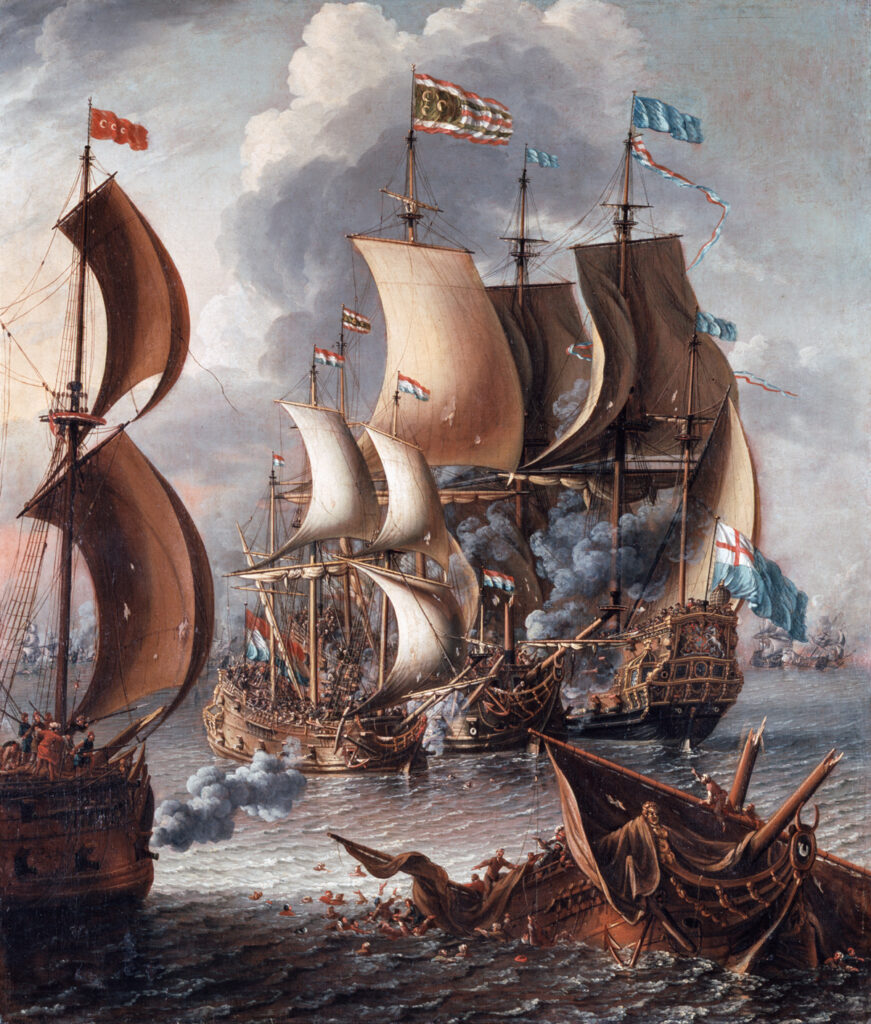
Corsair activity became part of this system, particularly as Spain and Portugal expanded aggressively into Muslim territories following the Reconquista. After the fall of Muslim rule in Al-Andalus and the expulsion of Muslims from Spain in 1492, many refugees fled to North Africa carrying deep grievances against the European kingdoms that had dispossessed them. Maritime warfare against Spanish and European shipping was therefore often viewed as retaliation within a broader civilisational conflict, not simply random criminal piracy.
This does not absolve corsairs of violence, captivity or ransom-taking. Civilians were captured, ships were seized and coastal communities were attacked. But it does challenge the myth that such violence was uniquely Muslim or separate from the wider practices of the age.
Barbary Corsairs Were European Renegades
One of the greatest misconceptions surrounding the Barbary corsairs is the assumption that they were all ethnically Arab or Berber Muslim sailors driven solely by religion.
In reality, several prominent corsair captains were Europeans. Perhaps the most famous example was Murad Reis the Younger, originally a Dutchman named Jan Janszoon. After being captured, he converted to Islam and became one of the most feared corsair commanders in the Mediterranean. He later led raids as far north as Ireland and Iceland.
Other Italian, Dutch, English, French and Spanish sailors also joined corsair fleets. Some converted willingly. Others were political refugees, adventurers, mercenaries or opportunists seeking wealth, protection and status.
This complicates the simplistic idea of a fixed religious conflict between Muslim pirates and Christian Europe. The Mediterranean was full of shifting loyalties, mixed crews, forced conversions, voluntary conversions, rival empires and men who crossed political and religious frontiers for survival or gain.
Europe paid tribute to the Barbary states
Another often-overlooked part of this history is that several European powers entered into treaties with the Barbary States and paid tribute or ransoms to secure safe passage for their ships.
Britain, France, the Netherlands and the young United States all negotiated agreements with North African rulers. Rather than maintaining constant naval warfare, many governments found it cheaper and more practical to pay for protection.
This was not unusual for the period. Maritime powers across the world regularly imposed taxes, tribute systems or protection arrangements on trade routes.
The United States eventually fought the Barbary Wars in the early 19th century partly because it no longer wanted to continue paying tribute after gaining independence from Britain. American officials framed the conflict as a fight against piracy, but it was also about asserting American naval and commercial power in the Mediterranean.
Islam prohibits piracy
One of the greatest distortions in the “Muslim piracy” narrative is the suggestion that Islam itself sanctioned maritime banditry.
Islamic teachings are explicit in condemning robbery, lawlessness and attacks on innocent travellers.
In Islamic jurisprudence, piracy falls under hirabah, a grave crime associated with armed robbery, banditry and spreading terror in society. Classical Muslim scholars regarded attacks on merchants, travellers and civilians as serious violations of Islamic law.
The Qur’an repeatedly emphasises justice, trust and the protection of life and property. Trade itself occupies a central place in Islamic civilisation. The Prophet Muhammad (peace be upon him) was a merchant, and Muslim societies historically depended on secure trade routes stretching from West Africa to China.
Far from glorifying piracy, Islamic teachings stressed responsibility, safety and protection for those travelling by land and sea.
Who controlled the narrative?
Much of the modern perception of the Barbary corsairs comes from European colonial-era writings that framed Muslim powers as savage, uncivilised and hostile to commerce.
These narratives emerged at the same time European empires were expanding into Africa, Asia and the Muslim world. Casting Muslim societies as lawless or barbaric helped justify European military intervention and colonial domination.
Yet European powers themselves engaged in conquest, slavery, naval raids and economic exploitation on a far larger global scale.
The Atlantic slave trade, colonial massacres and the destruction of indigenous societies were carried out primarily by European empires during the same historical period in which Europe condemned the “Barbary pirates.”
This does not mean corsair violence did not occur. It did. But reducing this entire era to “Muslim piracy” ignores the wider context of imperial warfare and erases Europe’s own deeply entrenched culture of state-sponsored maritime violence.
Beyond the myth
The history of the Barbary corsairs is not a story of inherently violent Muslims attacking a peaceful and innocent Europe. It is a story of empires competing for power in a brutal age of naval warfare.
It is also a reminder of how dominant powers often rewrite history. The Mediterranean was shaped not only by conflict, but by centuries of Muslim trade, navigation, scholarship, diplomacy and maritime law. Muslim sailors connected continents, facilitated commerce and helped secure major sea lanes long before European colonial dominance emerged.
To reduce this complex history to the phrase “Muslim pirates” is not merely inaccurate. It is a distortion that obscures the political realities of the time and perpetuates myths rooted in colonial-era propaganda.
You can read more of One Nation Media’s Islamic civilisation and African history features here.