


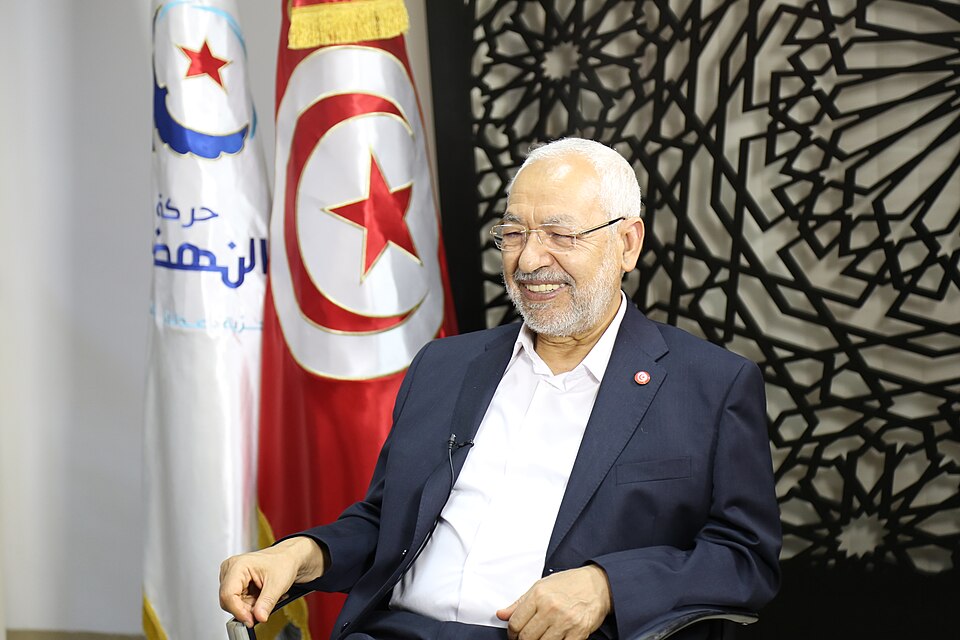
Tunisia’s main opposition leader Rached Ghannouchi has been sentenced to life in prison over controversial ‘terrorism-related’ charges.
The ruling was issued on Monday against the 84-year-old leader and dozens of other figures linked to the Ennahda movement, a “Muslim democratic party” which claims to combines Islamic principles and democracy.
A Tunis court specialising in terrorism cases handed down sentences ranging from 10 years to life imprisonment against 35 defendants accused of involvement in what prosecutors described as Ennahda’s “secret apparatus”.
Ghannouchi, the leader of Ennahda and one of the most prominent figures of Tunisia’s post-Arab Spring political era, received a life sentence and an additional 30 years. He has been in detention since April 2023.
His deputy and former Interior Minister Ali Larayedh was sentenced to 42 years in prison.
Former security official Mustafa Khedher received the heaviest punishment, a life sentence plus 96 years.
Several other defendants were handed sentences ranging from 10 to 50 years. The court also ordered all convicted individuals to remain under administrative supervision for five years after completing their prison terms.
The convictions were issued under Tunisia’s anti-terrorism legislation. Charges included forming and joining a terrorist organisation, assisting a terrorist group and other offences linked to national security.
The case centres on allegations that Ennahda operated a clandestine network that infiltrated state institutions and played a role in political violence. Ennahda has consistently denied the accusations.
The verdict has drawn condemnation from rights advocates and opposition figures.
The Freedom Observatory for Tunisia described the ruling as a “judicial and political massacre” and accused authorities of using the courts to settle political scores.
Ghannouchi was one of the central figures in Tunisia’s political transition after the 2011 revolution that removed long-time secular dictator Zine El Abidine Ben Ali.
His imprisonment comes amid a wider crackdown on opposition politicians, journalists, lawyers and activists under President Kais Saied, who has consolidated power since 2021 after suspending parliament and ruling by decree.
Critics say Tunisia’s judiciary has increasingly been used to target political opponents and silence dissent.
Saied denies accusations of authoritarianism and says his actions are necessary to protect the state from corruption, foreign interference and security threats.
Tunisia, once widely viewed as the “only democratic success story” of the Arab Spring, has seen growing concern from rights groups over political repression, shrinking civil liberties and the erosion of judicial independence.