


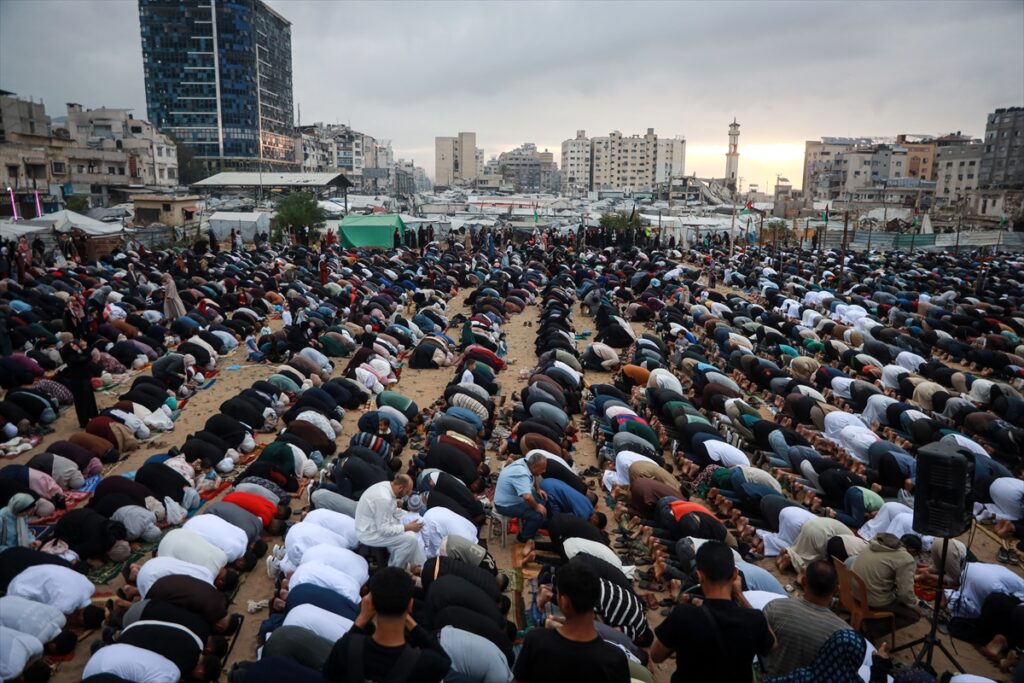
As millions of Muslims across the world watched the scenes of Hajj in awe — the oceans of white garments, the tears of du‘aa, the unity of the hujjaaj gathered on the plains of Arafah — many hearts were deeply moved by the power and symbolism of this sacred gathering, writes Moulana Uwais Dockrat.
Hajj remains one of the greatest manifestations of Islam’s universality. It is a moment where race, nationality, wealth, and worldly status seemingly disappear before Allah. Muslims from every corner of the globe stand together as one Ummah, all answering the same call: “Labbayk Allahumma Labbayk”.
Yet while listening attentively to the Khutbah of Arafah, one could not help but feel a growing discomfort at certain undertones within the message.
At one point, emphasis was placed on the idea that Hajj should not be “politicised,” with criticism directed at those who raise slogans, wave flags, or bring attention to political causes during the pilgrimage. The message appeared clear: Hajj should remain purely spiritual and detached from political affairs.
On the surface, this may sound reasonable. Certainly, the sanctity of Hajj must be protected from chaos, division, and partisan hostility. However, the matter becomes far more complicated when one reflects on what is selectively defined as “politics.”
For while Muslims are told not to raise concerns about oppression, injustice, or the suffering of the Ummah, the khutbah itself concluded with du‘aas for the ruler and his son. Suddenly, politics no longer seemed inappropriate for the sacred occasion.
This contradiction raises an important question: is the issue truly the presence of politics in Hajj, or merely which politics are permitted?
When Muslims speak about Gaza, oppression, authoritarianism, or the suffering of the Ummah, they are told to “keep politics out of Hajj”. Yet when support for rulers is expressed from the mimbar, it is framed as part of the deen itself.
This selective approach does not remove politics from religion. Rather, it advances a particular political ideology while silencing others.
Perhaps even more painful was the complete absence of any meaningful reference to the plight of the Ummah — particularly the ongoing genocide and humanitarian catastrophe unfolding in Gaza. As the eyes of the Muslim world turned toward Arafah, many hoped to hear at least a word acknowledging the suffering of Palestinians, the bloodshed, the starvation, and the immense pain currently gripping the Ummah.
But alas, there was no mention at all.
At a time when Muslims across the globe are crying, protesting, and making qunoot for Gaza, the silence felt deafening.
This is especially striking when one reflects on the historical and spiritual nature of the Farewell Khutbah itself. The Khutbah of the Prophet ﷺ on the Day of Arafah was not merely a sermon about rituals and personal devotion. It addressed justice, oppression, bloodshed, economic exploitation, tribal arrogance, human dignity, and the sanctity of life and wealth. It was deeply concerned with the moral and societal condition of humanity.
Islam has never been a religion confined to private spirituality alone. The Qur’an consistently connects worship with justice, prayer with responsibility, and faith with standing against oppression.
To ask Muslims to separate Hajj entirely from the realities facing the Ummah is therefore neither historically nor intellectually convincing. The issue is not whether Islam has political implications — it undoubtedly does. The issue is whose politics are allowed to be voiced and whose are silenced.
Hajj should absolutely remain a sacred space of worship, humility, and unity. But unity cannot mean silence in the face of suffering. Spirituality cannot mean detachment from the pain of the Ummah. And calls for “non-political Islam” become difficult to take seriously when political messaging itself continues — only in forms approved by those in power.
The plains of Arafah are meant to awaken the conscience of the Ummah, not numb it.
Moulana Uwais Dockrat is an Islamic scholar and public servant involved in education and da‘wah. A graduate of Darul Uloom Azaadville, he is the Managing Director of The Guardian Da‘wah Institute and founder of Markaz Manār al-Fikr, organisations dedicated to Islamic education and addressing contemporary misconceptions about Islam. He also serves as secretary of the Association of Muslim Schools (AMS) at both Gauteng and national levels.