


The Mali Empire is often remembered through images of gold, caravans and the legendary wealth of Mansa Musa. But its deeper legacy lies beyond material riches, writes Neelam Rahim.
Mali was one of the great Islamic civilisations of medieval Africa, where trade, governance and scholarship helped transform West Africa into a major centre of political power and intellectual life. Rising in the 13th century and declining as a major imperial power by the 16th century, Mali became one of the most influential states in African history. At its heart was a system built on commerce, faith and education, with Timbuktu emerging as one of the most important centres of learning in the medieval Muslim world.
Far from being isolated from world history, Mali was deeply connected to global networks through the trans-Saharan trade routes. These routes linked West Africa to North Africa, Egypt, the Hijaz and the wider Islamic world. Its legacy was not only political or economic, but intellectual, preserved through mosques, manuscripts and scholarly traditions that shaped generations.
The rise of the empire
The Mali Empire emerged around 1230 under Sundiata Keita, who unified the Mandé-speaking peoples after defeating the Sosso ruler at the Battle of Kirina. From this foundation, Mali expanded through military strength, political organisation and strategic control of trade routes.
Its power was rooted in geography. Positioned between the Sahara Desert and the forests of West Africa, Mali controlled key commercial corridors. Caravans carried gold, salt, ivory, leather and textiles across long desert routes, connecting Mali to markets in North Africa and beyond.
The empire was organised into provinces governed by appointed officials who answered to the emperor. Local rulers were allowed a degree of autonomy but remained under imperial authority. Taxation on trade goods provided revenue that supported administration, protected trade routes and helped develop major urban centres.
Islam and political identity
Islam gradually became central to the empire’s elite culture and administration. While traditional beliefs remained present in many communities, Islam shaped law, diplomacy, literacy and education in Mali’s urban centres.
The ruling class adopted Islamic practices, while Muslim scholars often served as advisers, judges and scribes. Arabic became an important language for written administration and religious scholarship, linking Mali to intellectual traditions across the Muslim world.
This did not erase local customs. Instead, Mali developed a distinctive civilisational model in which African political structures and Islamic learning coexisted. It was this fusion of indigenous authority, Islamic scholarship and commercial strength that gave the empire its unique character.
The most famous symbol of Mali’s global status was King Mansa Musa, whose pilgrimage to Makkah in the 14th century displayed the empire’s immense wealth and connected West Africa even more visibly to the wider Muslim world. His journey strengthened Mali’s reputation across North Africa, Egypt and beyond, while also helping draw scholars, architects and traders toward the empire.
Timbuktu: A centre of learning and trade
Timbuktu became one of the most significant intellectual centres in medieval Africa. Its rise was closely tied to trade along the Niger River and the trans-Saharan routes, which brought merchants, scholars and travellers from across the Islamic world.
Three major mosques defined its scholarly landscape: Djingareyber Mosque, Sankore Mosque and Sidi Yahya Mosque. These were not only places of worship but centres of education where teaching, writing and scholarly debate took place.
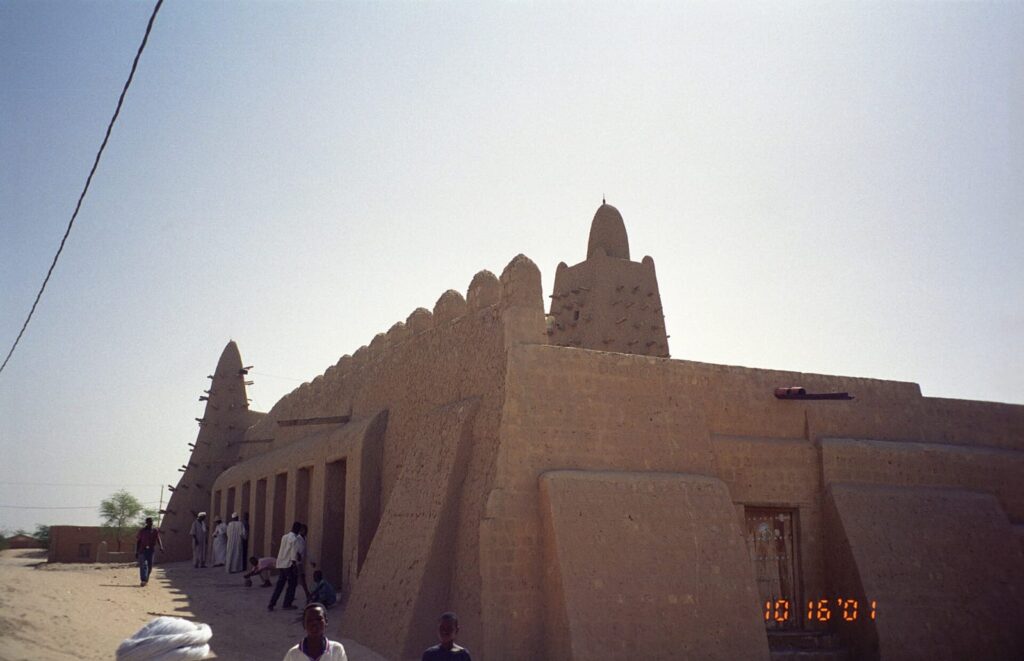
Sankore became the most famous centre of higher learning in Timbuktu. It was not a university in the modern institutional sense, but a network of scholars, teachers and students. Learning was built around individual scholars, memorisation, commentary, debate and handwritten manuscripts.
Students studied Islamic law, theology, grammar, astronomy, mathematics, medicine, literature and other sciences. This made Timbuktu part of a broader Islamic intellectual world, while also grounding scholarship in West African society.
Scholars, manuscripts and intellectual life
Timbuktu produced and attracted many respected scholars. Among the most notable was Ahmed Baba al-Timbukti, a 16th-century scholar associated with the wider Timbuktu scholarly tradition that survived Mali’s political decline. He wrote extensively on Islamic law, theology and jurisprudence, maintained a major private library and became one of the leading intellectual figures of his era.

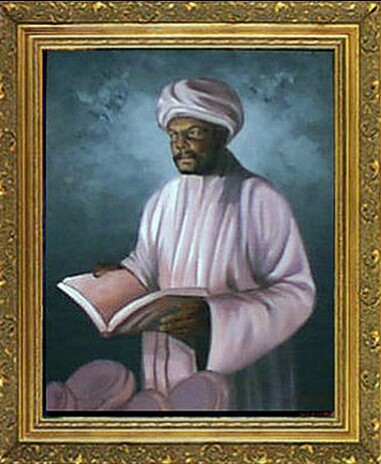
Long before and after him, generations of scholars helped build Timbuktu’s reputation as a city of knowledge.
Students travelled from across West Africa and beyond to study under its teachers. Knowledge was transmitted through oral instruction, debate and written manuscripts.
Manuscripts were central to this culture. They were copied by hand, studied, preserved and circulated between scholars.
These works covered religion, law, grammar, trade, ethics, medicine, mathematics, astronomy and governance. Many survive today, standing as evidence of the depth and diversity of African Islamic scholarship.
This legacy challenges the narrow idea that Africa was intellectually marginal before European colonialism. Mali and Timbuktu show that West Africa was not merely a source of raw materials, but a region of scholarship, literacy, law and intellectual production.
Economy, trade and imperial strength
Mali’s intellectual growth was closely tied to its economic power. Control of gold-producing regions made the empire one of the wealthiest states in the medieval world. Gold from West Africa was exchanged for salt from the Sahara, as well as textiles, horses and books from North Africa.
Trade routes were protected and regulated by the imperial administration, ensuring stability for merchants. This economic system allowed the empire to fund cities, support scholars and maintain political control over vast territories.
Books themselves became valuable commodities. The movement of manuscripts and scholars reflected a civilisation in which wealth was not only displayed through gold, but invested in knowledge, law and religious learning.
Decline and changing power
From the late 15th century onwards, Mali began to weaken due to internal succession disputes, regional fragmentation and external pressure from rising states. The Songhai Empire gradually expanded, overtaking many of Mali’s former territories and trade routes.
Yet Mali’s decline as an imperial power did not erase its civilisational legacy. Timbuktu remained an important intellectual centre for centuries, even as political control shifted. Its mosques, scholars and manuscripts preserved the memory of a West African Islamic civilisation whose influence outlived the empire itself.
The Mali Empire was not simply a wealthy medieval state. It was a civilisation that built institutions of governance, trade and learning. At the heart of this legacy stood Timbuktu, a city where mosques became centres of scholarship, scholars shaped intellectual traditions, and manuscripts preserved centuries of knowledge.
From the classrooms of Sankore to the libraries of Timbuktu’s scholars, Mali’s story challenges historical narratives that overlook Africa’s intellectual contributions. It stands as evidence that West Africa was not isolated, backward or peripheral, but deeply connected, scholarly and influential.
You can read more of One Nation Media’s Islamic civilisation and African history features here.