
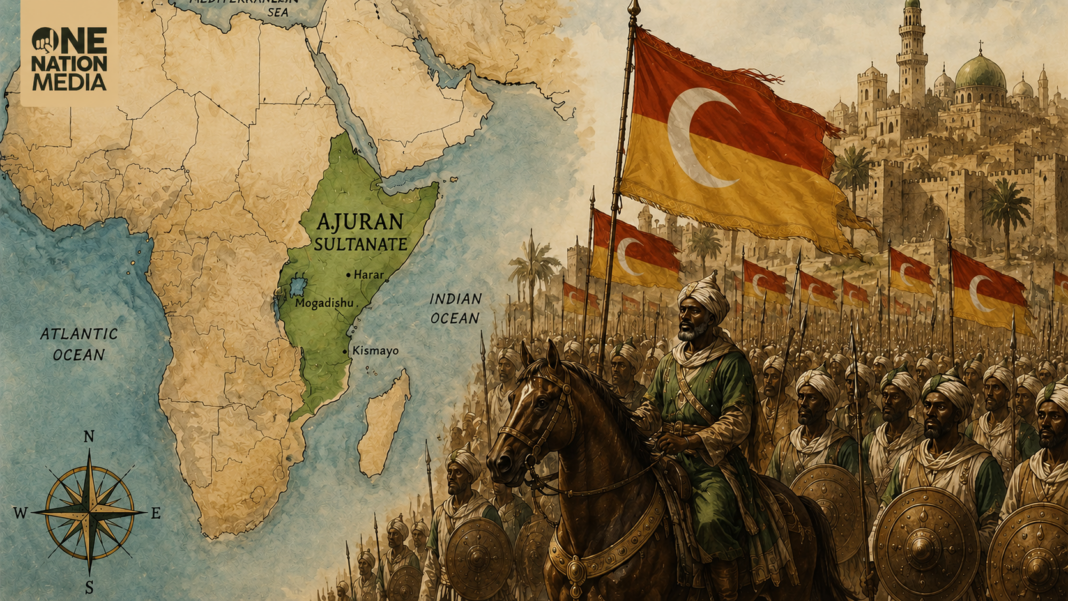

Long before European colonial powers carved borders across the Horn of Africa, Somali Muslims had already built one of the continent’s most sophisticated Islamic empires. The Ajuran Sultanate was not a tribal relic or historical footnote, but a powerful Muslim civilisation that governed large parts of present-day Somalia and sections of Ethiopia through Sharia, trade, military power and advanced water management, writes Neelam Rahim.
Between the 13th and 17th centuries, the Ajuran Sultanate emerged as one of the most organised Islamic polities in East Africa. It developed a centralised political system, controlled major riverine and coastal territories, maintained long-distance trade networks and engineered irrigation systems that sustained agriculture, urban life and political authority for centuries.
Its history matters because it challenges one of the most persistent colonial myths about Africa: that complex governance, law, commerce and infrastructure only arrived with European intervention. The Ajuran Sultanate shows the opposite. Long before colonialism, African Muslims were building states, administering justice, managing resources and connecting the continent to the wider Islamic world.
An Islamic sultanate before colonial borders
The Ajuran Sultanate was not merely ruled by Muslims, it was structured around Islamic political authority. Sharia informed legal administration, taxation and dispute resolution, while mosques and centres of Islamic learning formed part of the Sultanate’s urban and political life.
Historical traditions associate the ruling dynasty with the House of Garen, a political lineage that combined military authority with religious legitimacy. The state operated through a structured hierarchy of governors, commanders, qadis (judges) and tax officials who exercised authority across coastal cities, river valleys and agricultural settlements.
This degree of centralisation distinguished the Ajuran from many neighbouring societies of the period. While clan structures remained important within Somali society, the Sultanate built a broader political order capable of regulating trade, managing agricultural production and projecting authority across long distances.
Its existence directly undermines colonial-era portrayals of premodern African societies as politically primitive or institutionally weak. Centuries before European domination, Muslim polities in the Horn of Africa were administering taxation systems, regulating commerce and integrating Islamic legal frameworks into public life.

The hydraulic empire of the Horn
One of the most remarkable features of the Ajuran Sultanate was its mastery of water. In a region shaped by drought, river valleys and seasonal scarcity, control of water became central to political power. The Ajuran developed wells, canals, reservoirs, dams and irrigation systems along the Jubba and Shabelle river systems, transforming agriculture and enabling long-term settlement growth.
Historians have often described the Ajuran state as one of Africa’s most significant hydraulic powers because of the way it organised society around water management. Some limestone wells associated with the period reportedly remained in use centuries later, reflecting the durability of the Sultanate’s engineering achievements.
This infrastructure was not simply economic, it reinforced state authority. By controlling access to irrigation, farmland and water resources, the Sultanate strengthened its influence over both nomadic and settled populations. Water management became a mechanism of governance, showing how engineering, agriculture and political control were woven together within an Islamic governing structure.
Trade and the Indian Ocean world
The Ajuran Sultanate also prospered through its integration into the Indian Ocean trading network. Somali coastal cities under its influence became major commercial centres linking East Africa to Arabia, Persia, India and the wider Muslim world.
Goods such as livestock, ivory, hides and agricultural produce moved through these routes, while textiles, ceramics and luxury goods arrived from Asia and the Middle East. These commercial networks did not only carry wealth. They carried scholarship, legal traditions, religious ideas and political relationships across the Muslim world.
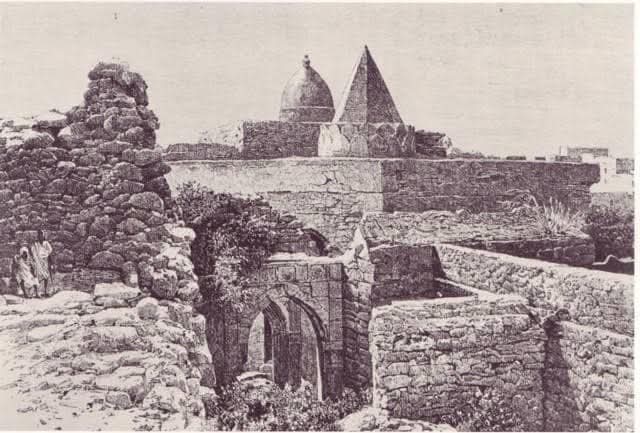
Mogadishu became one of the great centres of commerce and Islamic culture in the Horn of Africa. However, its Islamic importance predates Ajuran rule. Sultan Fakhr ad-Din was not an Ajuran ruler, but the founder and first sultan of the medieval Mogadishu Sultanate and the Fakhr ad-Din dynasty, representing an earlier phase of Somali Islamic statehood.
His legacy reflects the deep Islamic urban culture that already existed in Mogadishu before the city later came under Ajuran influence. The Fakhr ad-Din Mosque in Hamar Weyne, widely regarded as one of the oldest mosques in East Africa, remains a lasting symbol of that earlier Somali Islamic civilisation.
The later incorporation of Mogadishu into the expanding Ajuran political sphere reflected continuity rather than sudden transformation. Somali Muslim governance, trade and scholarship had already been established under earlier sultanates before being absorbed into the wider Ajuran polity.
Military power and regional authority
The Ajuran Sultanate was not sustained by trade and infrastructure alone. It also possessed the military organisation required to defend its territories, secure trade routes and impose central authority across a vast region.
The Sultanate maintained armed forces capable of protecting coastal cities, riverine settlements and agricultural zones.
Its commanders helped enforce the authority of the ruling dynasty, while its military strength allowed the state to manage internal rebellions, resist external threats and maintain influence across key parts of the Horn. This military power was essential to the Sultanate’s wider political system. Trade required security. Irrigation required enforcement. Taxation required authority.
The Ajuran state understood that governance could not survive on administration alone; it required the ability to defend territory and uphold order.
Its military capacity also helped place Somali Muslim power within the broader politics of the Indian Ocean world. The Ajuran were not passive participants in regional history, they were active political actors who guarded commercial interests, projected authority and helped shape the balance of power along the East African coast.
Decline and fragmentation
By the 17th century, the Ajuran Sultanate began to weaken under the pressure of internal resistance, regional competition and changing political conditions. Centralised taxation and authority generated opposition among some Somali clans, while new powers gradually emerged in the spaces the Sultanate once controlled.
Its decline did not erase its historical significance. Nor did it represent the failure of Islamic statehood in the region. Rather, it marked the transformation of political authority within Somali Muslim society, as older imperial structures fragmented and gave way to new local and regional powers.
The physical and cultural legacy of the Ajuran period survived through wells, ruined settlements, oral traditions, historic cities and the broader memory of Somali Muslim statehood. Its achievements remained embedded in the landscape and historical consciousness of the Horn long after the Sultanate itself had faded.
A forgotten islamic civilisation
The Ajuran Sultanate remains one of the clearest examples of an early centralised Islamic civilisation in sub-Saharan Africa. It governed territory, regulated commerce, administered justice, developed infrastructure and connected East Africa to the wider Muslim world.
More importantly, its history challenges modern narratives that reduce Africa to colonialism, tribal fragmentation or foreign intervention. The Horn of Africa possessed deeply rooted Islamic civilisational traditions long before colonial borders divided the region into competing nation-states.
The Ajuran experience also demonstrates that Islam in Africa was never confined to private spirituality. It shaped governance, law, commerce, diplomacy, military authority, engineering and political identity. Faith was not separated from public life but served as the organising framework through which society was administered.
In an age where Muslim political history is often marginalised, fragmented or forgotten, the Ajuran Sultanate stands as a reminder that sophisticated Islamic civilisations once flourished across the African continent. Somali Muslims built states, managed economies, defended territories and shaped global trade networks long before Europe imposed its colonial order on the region.
You can read more of One Nation Media’s Islamic civilisation and African history features here.