


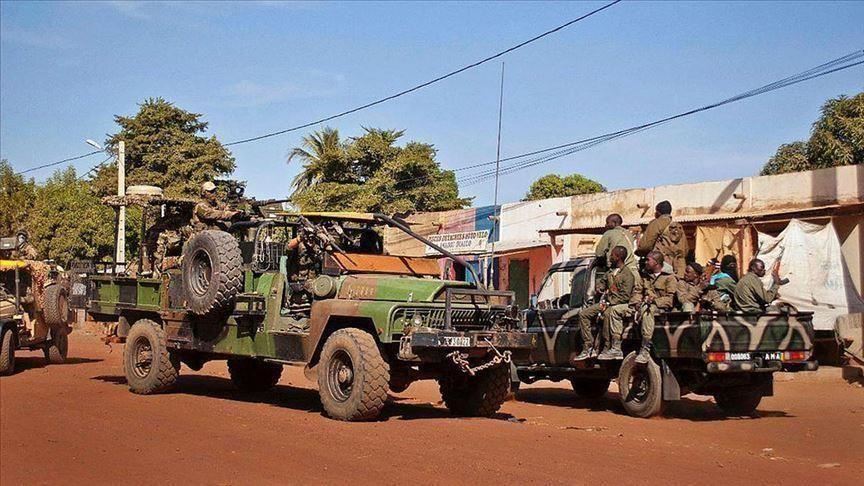
A Malian army drone strike has reportedly killed at least 10 civilians who were preparing for a wedding in the central San region, as the country faces a deepening security crisis.
Residents in the locality of Tene told AFP that the victims were part of a procession of motorbikes linked to wedding preparations when the strike took place.
One resident said “10 of our children” were killed, adding that the strike targeted “a procession of motorbikes following one another.”
The reported civilian deaths come amid a major escalation in Mali’s long-running conflict, with the military government facing coordinated attacks across several parts of the country and growing scrutiny over its security operations.
Last month, a wave of coordinated attacks struck strategic military and urban centres, including Kidal and Gao in the north, Sevare and Mopti in central Mali, and Kati, which hosts the country’s largest military garrison near the capital, Bamako.
According to the official account, a suicide car bombing in Kati killed Defence Minister Sadio Camara, one of the most powerful figures in Mali’s military government, along with dozens of others. The blast reportedly destroyed the minister’s residence and several surrounding buildings.
The multi-front assault marked one of the most serious escalations in Mali’s conflict in recent years and raised fresh questions over the military authorities’ ability to contain armed groups despite repeated promises to restore security.
The attackers were identified as members of Jama’at Nusrat al-Islam wal-Muslimin (JNIM), the Sahel’s most powerful al-Qaeda-linked coalition, which is now reportedly coordinating with Tuareg separatist factions under the banner of the Azawad Liberation Front (ALF).
In the days that followed, armed groups appeared to attack or seize additional strategic positions in northern Mali, including the Tessalit military camp near the Algerian border, although Malian authorities disputed the full extent of the losses.
Mali’s shifting alliances
Northern Mali has seen recurring rebellions since 1963, when Tuareg communities first rose up against the central government in Bamako. The Saharan and Sahelian regions inhabited largely by Tuareg and Arab communities have long accused the state of political neglect, marginalisation and heavy-handed rule.
Malian security analyst Paul Oula told Anadolu that Mali has faced a cyclical crisis since 1963, although the context has changed with each new phase of conflict.
The 2012 rebellion marked a major turning point when armed groups, including Ansar Dine, al-Qaeda in the Islamic Maghreb and Al-Mourabitoun, temporarily allied with the National Movement for the Liberation of Azawad to seize Mali’s northern regions of Gao, Timbuktu and Kidal.
France launched Operation Serval in January 2013, pushing armed groups out of major towns. The mission later evolved into Operation Barkhane, supported by the G5 Sahel Joint Force, the UN, the EU and the French-led Takuba Task Force.
That security architecture began to collapse after Mali’s military authorities, who seized power in the August 2020 coup, ended or restricted the mandates of foreign and multilateral forces operating in the country.


Since 2022, Mali has pivoted sharply toward Russia, which has supplied instructors and mercanenries through Africa Corps, the structure that absorbed Wagner Group operations in Africa.
Following the latest wave of coordinated attacks, Russia’s Africa Corps confirmed on Telegram that it had withdrawn from the northern city of Kidal alongside personnel from the Malian army. The group later said it continued to carry out combat operations and reconnaissance against armed groups.
Regional diplomacy under strain
Moscow has issued repeated statements of support for Mali’s military government since the attacks, while Bamako continues to accuse France of backing armed groups, allegations Paris denies.
Analysts say those accusations serve a political purpose for Mali’s military authorities by presenting the conflict as the result of foreign interference while mobilising nationalist sentiment at home.
At the same time, Algeria’s traditional role as a mediator in northern Mali has largely deteriorated. Bamako has renounced the 2015 Algiers Peace and Reconciliation Accord, while relations worsened after Algerian air defences destroyed a Malian drone in an incident that triggered a diplomatic crisis between the two countries.
Both countries recalled their ambassadors, although Algerian President Abdelmadjid Tebboune has since proposed a new mediation initiative. Analysts remain sceptical that Bamako is currently willing to return to externally led mediation.
The latest drone strike and wider security escalation have placed renewed pressure on Mali’s military rulers, who have pledged to defeat armed groups but continue to face expanding attacks, worsening instability and allegations of civilian deaths during military operations.