


The Horn of Africa remains home to one of the Muslim world’s most consequential political disputes: Somaliland’s attempted secession from Somalia and the future of Somali unity, writes Neelam Rahim.
More than three decades after Somaliland declared unilateral independence following the collapse of Somalia’s central government, Somalia remains internationally recognised as one sovereign state. At stake is far more than a legal dispute over borders. The Somaliland question sits at the centre of a deeper struggle over colonial fragmentation, Muslim political unity, foreign interference and control of one of the world’s most strategically important regions. For many Somalis, Somaliland’s attempted separation is not the fulfilment of self-determination, but the continuation of divisions first imposed by British and Italian colonial rule.
The issue has become even more sensitive after Israel became the first state to formally recognise Somaliland as independent last December, in a move condemned by Somalia, the African Union and several regional states as a direct attack on Somalia’s sovereignty. Somalia described Israel’s recognition as an act of aggression and vowed to pursue diplomatic and legal action against the move.
For many Muslims, Somaliland’s embrace of Israel during the ongoing oppression of Palestinians and genocide in Gaza represents a betrayal of Islamic solidarity and the wider interests of the ummah. But the issue is not only moral, it is also strategic. Israel’s move forms part of a wider struggle for influence across the Red Sea, the Gulf of Aden and the Horn of Africa, where foreign powers have long sought access, ports, military reach and political leverage.
A colonial division that never reflected Somali identity
The roots of the dispute lie in European colonialism. Britain controlled the northern region known as British Somaliland, while Italy colonised southern Somalia around Mogadishu. These artificial divisions separated a people united by language, ethnicity, culture, and their Islamic faith.
When both territories gained independence in 1960, they voluntarily united to form the Somali Republic. The union was celebrated as a rejection of colonial fragmentation and a step towards rebuilding Somali unity after decades of European occupation. The aspiration was clear: one Somali nation, not competing mini-states created along colonial lines. That vision later suffered immense damage under dictatorship, clan tensions and civil war, culminating in the collapse of Siad Barre’s government in 1991. In the aftermath, Somaliland declared unilateral independence.
But Somalia itself never ceased to exist as a sovereign state under international law. Despite periods of state collapse and internal fragmentation, Somalia retained its legal continuity and international recognition. The African Union has also reaffirmed that Somaliland remains an integral part of the Federal Republic of Somalia and warned that recognising it would undermine Somalia’s unity, sovereignty and territorial integrity.
Somalia’s recognition
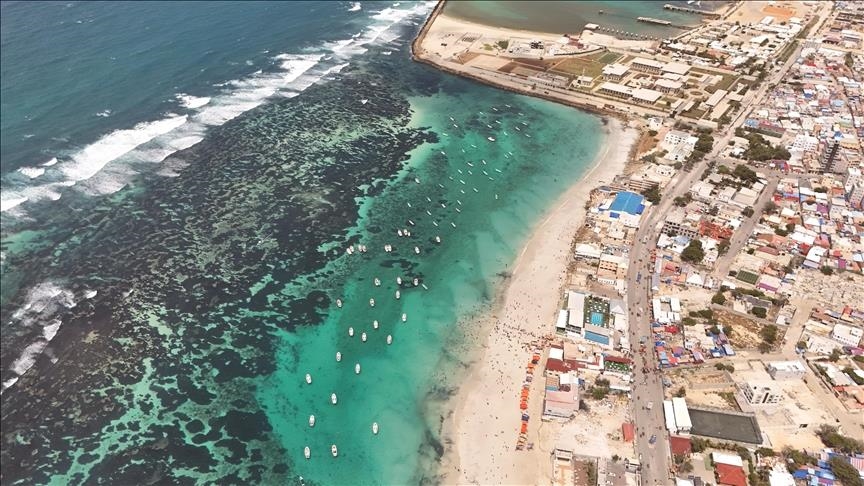
Mogadishu continues to reject Somaliland’s secession, arguing that it violates Somalia’s territorial integrity and threatens long-term regional stability. This position aligns with African Union principles, which generally oppose unilateral secession because of the dangerous precedent it could set across a continent already scarred by colonial borders, separatist conflicts and foreign-backed fragmentation.
For Somalia, the Somaliland issue is therefore not a completed divorce. It is an unresolved political crisis within one nation. Despite its internal challenges, Somalia continues to engage internationally as the recognised sovereign authority over Somali territory. It participates in diplomacy, security cooperation and reconstruction initiatives as one state, not as separate competing countries.
The overwhelming international position remains clear: Somalia is one sovereign state, and Somaliland’s attempted secession does not erase that legal and political reality.
The UAE-Israel axis in the Horn of Africa
Somaliland’s foreign policy has increasingly exposed the danger of separatist entities seeking legitimacy through external patrons.
The UAE has already established deep economic and strategic interests in Somaliland, especially around the Port of Berbera. DP World signed a major deal to develop the port, reportedly involving a $442 million investment and a controlling stake, while Berbera has also been linked to UAE military and logistics ambitions in the Horn of Africa.
This is not neutral investment, but a part of a wider Emirati strategy to build influence across ports, coastlines and maritime routes from the Gulf to the Red Sea and East Africa. In fragile Muslim regions, Abu Dhabi has repeatedly used money, security partnerships and infrastructure deals to shape political outcomes and expand its geopolitical reach.
Israel’s recognition of Somaliland now adds another dangerous layer. Somaliland’s leadership appears willing to trade Somalia’s sovereignty and Muslim solidarity for foreign recognition, investment and strategic partnerships. Reuters reported that Somaliland’s president said the territory expected a trade agreement with Israel and had minerals, including lithium, to offer in exchange for Israeli technology.
This should be understood for what it is: a foreign-backed attempt to normalise the fragmentation of Somalia while embedding Israeli and Emirati influence in one of the most sensitive regions of the Muslim world.
Israel, recognition and betrayal
For Israel, Somaliland offers a potential foothold near the Red Sea, the Gulf of Aden and the wider maritime routes connecting Africa, the Middle East and Asia.
For Somaliland, Israel offers something it has sought for more than three decades: international recognition. But the price of that recognition is steep. It places Somaliland on the side of a genocidal Zionist state carrying out oppression against Palestinians while also undermining the sovereignty of Somalia, a fellow Muslim-majority brother nation.
Across the Muslim world, normalisation with Israel is already viewed by many as morally indefensible. In Somalia, where support for Palestine remains deeply rooted, Somaliland’s willingness to embrace Israel is seen by many as a betrayal of Islamic solidarity and national unity.
For Mogadishu, the issue is not only that Israel recognised Somaliland. It is that a foreign power has attempted to interfere directly in Somalia’s internal affairs by legitimising secession from within its recognised territory. The danger is clear. If foreign powers can reward separatist regions with recognition, ports, trade deals and military partnerships, then the unity of Muslim lands becomes permanently vulnerable to external manipulation.
Islam remains the strongest bond across Somalia
Despite political divisions, Islam continues to bind Somali society together across regional and clan lines. Somalis in Somaliland and southern Somalia overwhelmingly share the same Sunni Muslim identity, religious traditions and civilisational heritage. Mosques, Islamic scholars and religious institutions remain among the few enduring structures that transcend political fragmentation.
Long before European colonialism imposed borders on the region, Islam shaped Somali social organisation, trade networks and systems of communal responsibility. Somali unity was therefore never purely political. It was also rooted in a shared Islamic civilisation. This is why many Somalis continue to reject permanent separation. They view fragmentation not as liberation, but as the further weakening of a Muslim nation already devastated by war, foreign intervention and internal division.
The struggle for Somali unity is therefore not nostalgia. It is a rejection of colonial fragmentation, foreign manipulation and the normalisation of Muslim political weakness.

The unfinished struggle for Somali unity
Somalia still faces immense internal challenges. Federal tensions, clan disputes, security threats and unresolved territorial disputes in areas such as Sool and Sanaag continue to complicate efforts at national reconstruction. But these challenges do not justify the permanent partition of Somalia. If anything, they underline the need for serious reconciliation, radical reform and rebuilding within a united framework.
The answer to state failure is not endless fragmentation. It is the restoration of justice, stability and unity. The Somaliland question remains unresolved not because the world is confused, but because the overwhelming majority of states still recognise Somalia as one sovereign country. Israel’s recognition does not change that reality, rather it exposes how foreign powers are willing to exploit Somali divisions for their own strategic gain.
For many Somalis, the struggle is ultimately larger than borders. It is about resisting the fragmentation of the Muslim world and preserving the possibility that Somalia, despite decades of hardship, can rebuild as one nation. Somali unity remains not only a legal position, but an anti-colonial, Islamic and strategic necessity in a region being carved up by foreign powers with nefarious agendas.