


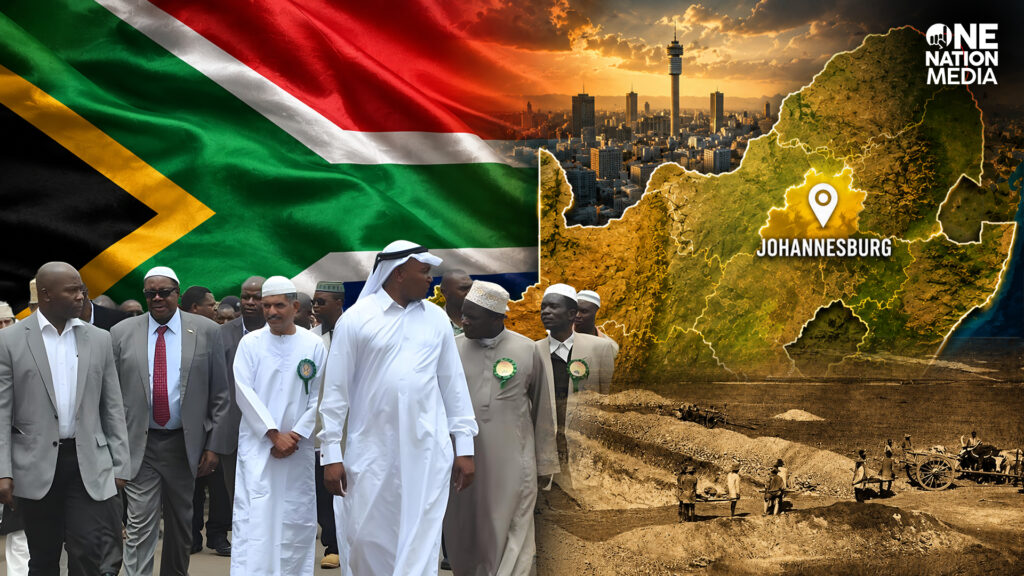
Long before modern migration debates and xenophobic tensions gripped South Africa, Malawian Muslims were already helping build Johannesburg through the brutal labour systems of colonial mining capitalism, writes Neelam Rahim.
The presence of Malawian Muslims in Gauteng stretches back more than a century to the discovery of gold on the Witwatersrand in 1886. The rapid expansion of South Africa’s mining economy created a huge demand for cheap African labour, drawing thousands of workers from across the region, including from what was then Nyasaland, present-day Malawi.
According to researcher Dr Jameel Asani, Malawians were among the earliest migrant labourers recruited into the mines through colonial labour systems such as the Witwatersrand Native Labour Association, commonly known as Wenela.
Many eventually settled in areas like Fordsburg, Brixton and Westbury, carrying not only their labour but also their Islam into the heart of Johannesburg.
In his PhD research on Malawian Muslim migrants in Johannesburg, Asani argues that these communities form part of a long and deeply rooted history of labour, migration and religious resilience in South Africa.
“What is remarkable is that many of these early migrants were already Muslim and they carried their faith with them,” he told One Nation Media.
“The Malawian Muslim presence in Gauteng is a living inheritance of over a century of movement, labour and spiritual resilience.”
Colonial labour and Muslim migration
Asani’s research argues that Malawian Muslims played a significant but largely under-recognised role in reshaping Islam in South Africa into a more cosmopolitan and less ethnically confined faith community.
Historically, Islam in South Africa was shaped primarily by the Cape Malay community, descended from enslaved people and political exiles from Southeast Asia, and later by Indian Muslim merchant communities. Both traditions contributed immensely to Islamic life in South Africa, helping establish mosques, institutions and religious scholarship across the country.
However, Asani argues that the arrival of Black African Muslim migrants from Malawi helped broaden the social character of Islam in South Africa beyond its historically ethnic communal structures.
“Malawian Muslims as Black African Muslims disrupted that ethnic monopoly,” he said.
“They brought a form of Islam indigenous to sub-Saharan Africa, practised in Chichewa and Yao and rooted in East and Central African Tariqa traditions.”
In his research on Malawian Muslim migrants in Johannesburg, Asani argues that this migration history is deeply tied to both economic exploitation and spiritual resilience. His study documents how generations of Malawian migrants became absorbed into low-paying and often exploitative labour systems, first under colonial mining structures and later within South Africa’s informal economy.
The research highlights how many Malawian migrants continue to work in vulnerable sectors such as shopkeeping, tailoring, vending, mosque maintenance and other forms of informal labour, often facing poor wages, overcrowded living conditions and exploitation linked to their undocumented status.
Asani’s research argues that many Malawian migrants historically entered low-paying and vulnerable labour sectors, both during the mining era and within Johannesburg’s contemporary informal economy.
Uncomfortable truths about the ‘Ummah’ ideal
But Asani’s research also raises uncomfortable questions about whether the Islamic ideal of the global Ummah is always reflected in practice.
He notes that many migrant Muslims continue to experience exclusion, exploitation and unequal treatment, sometimes even within Muslim spaces themselves.
“When a Malawian Muslim is turned away from an Islamic organisation meant to support needy Muslims, or charged exploitative rent by a Muslim landlord, then the Ummah ideal is not being lived,” he said.
Asani stressed that his findings are not intended as a condemnation of Islamic institutions, but rather as a challenge towards greater sincerity, solidarity and self-reflection within Muslim communities.
“The migrants are not asking for charity,” he said. “They are asking for brotherhood.”
The story of Malawian Muslims in Johannesburg is not merely one of migration, labour or survival. It is also a reminder that Islam in Southern Africa was never confined to a single ethnicity or class. More than a century later, their presence continues to challenge Muslims to ask whether the ideals of the Ummah are truly reflected in the lived realities of migrant communities today.
You can download and read Dr Jamal Asani’s Phd research here.