


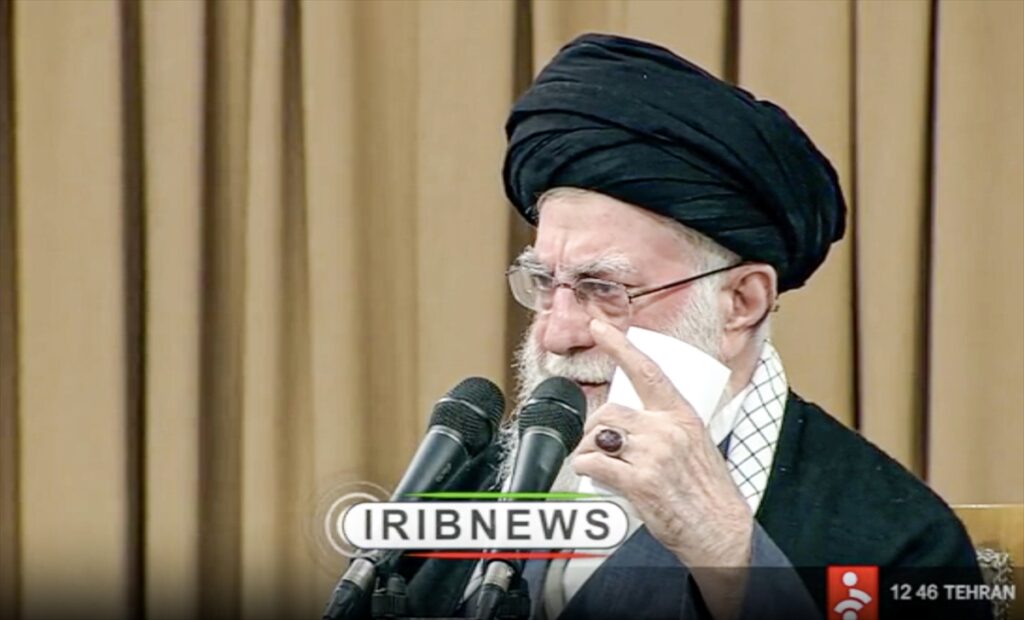
The New York Times reported on Wednesday of a sinister plan hatched by the United States and Israel to enact regime change in Iran by replacing its supreme leader Ali Khamenei with former president Mahmoud Ahmadinejad.
The paper claimed the “audacious plan”, developed by the Israelis and which Ahmadinejad had been “consulted”, quickly went awry.
Bizarrely, Ahmadinejad was injured on the war’s first day by an Israeli strike at his home in Tehran that had been designed to free him from house arrest, American officials and an associate of Ahmadinejad said. He survived the strike, they said, but after the near miss he became disillusioned with the regime change plan, the paper claimed.
He has not been seen publicly since then and his current whereabouts and condition are unknown.
The paper said Ahmadinejad was an unusual choice While he had increasingly clashed with the regime’s leaders and had been placed under close watch by the Iranian authorities, he was known during his term as president, from 2005 to 2013, for his calls to “wipe Israel off the map.” He was a strong supporter of Iran’s nuclear program, a fierce critic of the United States and known for violently cracking down on internal dissent.
How Ahmadinejad was recruited to take part remains unknown.
The paper said the effort was part of a multi-stage plan developed by Israel to topple Iran’s government. It underscores how US President Donald Trump and Prime Minister Benjamin Netanyahu of Israel went into the war not only misjudging how quickly they could achieve their objectives but also gambling to some degree on a risky plan for leadership change in Iran that even some of Trump’s aides found implausible. Some American officials were sceptical in particular about the viability of putting Ahmadinejad back into power.
A spokesperson for Mossad, the Israeli foreign intelligence agency, declined to comment.
The paper said US officials spoke during the early days of the war about plans developed with Israel to identify a pragmatist who could take over the country. Officials insisted that there was intelligence that some within the Iranian regime would be willing to work with the United States, even if those people couldn’t be described as “moderates.”