


Nigeria’s deepening insecurity crisis is no longer simply a battle against Boko Haram. Across large parts of the country’s north, armed bandit networks, governance failures and allegations of military corruption are fuelling a wider collapse of state authority, leaving millions trapped between criminal violence and weak institutions, writes Neelam Rahim.
What was once framed primarily as a counterinsurgency conflict has evolved into something far broader and more dangerous: a decentralised landscape of kidnapping, extortion, cattle theft and territorial control, particularly across north-west and north-central Nigeria. In many rural areas, armed groups now operate with near impunity, exploiting the absence of effective governance and the inability of authorities to protect vulnerable communities.
According to Good Governance Africa, parts of north-central Nigeria are experiencing “a dangerous convergence of governance paralysis and spiraling insecurity,” with communities increasingly exposed to repeated attacks while local authorities struggle to respond. The organisation noted that state institutions in several affected regions are becoming increasingly unable to guarantee security, allowing armed networks to expand their influence.
The crisis has become particularly severe in Benue, Plateau, Zamfara and Katsina states, where villages have faced repeated raids, mass displacement and ransom kidnappings. Residents frequently accuse security forces of arriving too late, failing to intervene, or disappearing entirely when attacks occur. For many communities, daily life is now shaped less by confidence in state protection and more by survival.
Beyond Boko Haram: Nigeria’s expanding lawlessness
Researchers increasingly argue that much of the violence in northern Nigeria is no longer driven primarily by religious ideology. While Boko Haram and Islamic State West Africa Province (ISWAP) remain active, large sections of the conflict have evolved into organised criminal enterprises built around coercion, extortion and territorial dominance.

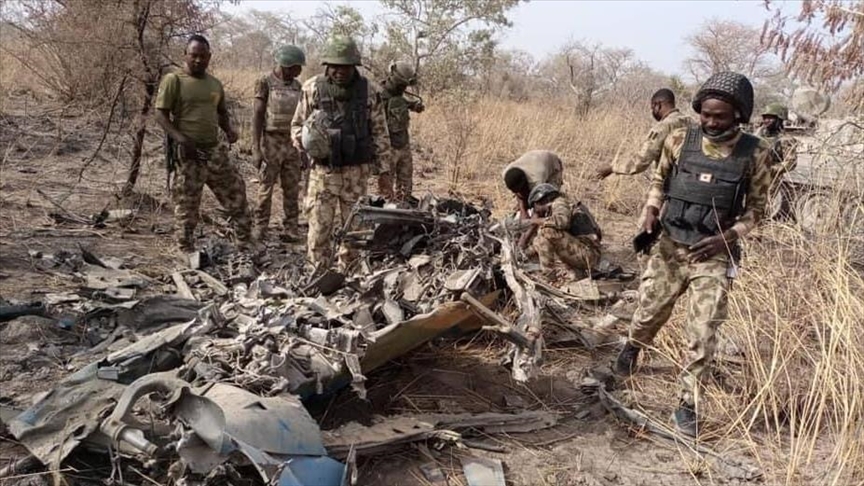
A Good Governance Africa report on the Lakurawa network warned that what began as a cross-border armed movement had “transformed into criminal predatory governance,” shifting away from ideological objectives toward systems of violent taxation and community control.
Bandit groups now routinely impose levies on villages, seize livestock, abduct civilians for ransom and block agricultural activity.
In many rural communities, farmers are unable to cultivate land without paying armed groups for permission or protection. The resulting instability has disrupted food production, accelerated displacement and undermined already fragile local economies.
The Council on Foreign Relations has described the situation as an “epidemic of lawlessness”, warning that Nigeria’s inability to restore authority across large parts of the north risks entrenching long-term instability.
When the state becomes part of the crisis
The violence has also intensified scrutiny of Nigeria’s military and security institutions. In May 2026, a military operation and separate attacks by armed groups reportedly killed around 100 civilians in Zamfara state, triggering condemnation from human rights organisations and local observers.
The incident echoed a longer history of allegations against the Nigerian armed forces. Amnesty International has documented accusations against both Boko Haram and the military dating back more than a decade. In a submission to the UN Human Rights Council, Amnesty stated that “the armed group known as Boko Haram and the Nigerian military have committed crimes under international law in the context of the conflict in north-east Nigeria.”
The organisation accused Boko Haram of killings, rape, forced marriage and the recruitment of child soldiers, but also raised serious allegations against state forces. Amnesty stated that “more than a thousand suspects have died in military detention facilities as a result of extrajudicial executions, torture, starvation, disease, suffocation or other reasons associated with extremely poor detention conditions.”

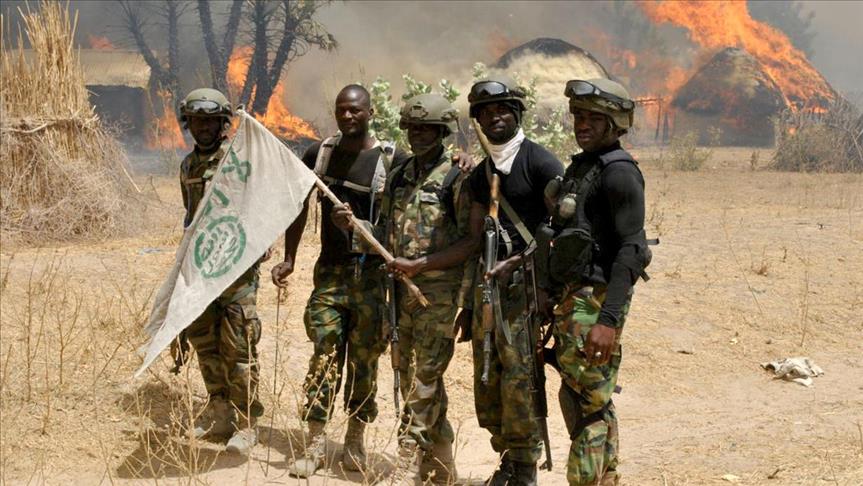
One of the most serious incidents highlighted by Amnesty was the March 2014 killing of recaptured detainees in Maiduguri.
According to the organisation, “Nigerian soldiers executed more than 640 recaptured detainees” after they were freed during an attack on Giwa Barracks. Amnesty added that no meaningful prosecutions followed.
For many Nigerians, such allegations reinforce concerns that abuses by security forces have persisted for years without accountability, even as the government continues to present the military as central to restoring order.
Those concerns deepened further in 2025 when authorities detained dozens of security personnel over allegations of weapons trafficking. According to media reports, soldiers and police officers were arrested for allegedly diverting arms from military stockpiles and selling them to armed groups operating across northern Nigeria. The arrests intensified public fears that elements within state institutions may be indirectly sustaining the very violence they are tasked with combating.
A crisis of governance
Nigeria’s insecurity crisis increasingly reflects something deeper than isolated security failures. Analysts and opposition figures alike argue that the violence is inseparable from corruption, weak governance, institutional decay and the inability of the state to maintain legitimacy beyond major urban centres.
Peter Obi, former governor of Anambra State and one of Nigeria’s leading opposition figures, recently described the situation as “a collapse of leadership responsibility,” warning that insecurity was worsening because authorities were failing to protect citizens.
Meanwhile, the military continues to publicly insist that progress is being made. This week, Chief of Army Staff Lieutenant General Olufemi Oluyede reaffirmed the army’s commitment to defeating terrorism and banditry, stating that troops remained resolute despite ongoing setbacks.
Yet for millions living across northern Nigeria, official assurances carry little meaning against the reality on the ground. In regions where armed men raid villages, collect levies and abduct civilians while state institutions appear weak, corrupt or absent, the line between insurgent influence and state failure has become increasingly blurred.
Across large parts of northern Nigeria, the state no longer governs through trust, legitimacy or protection, but through sporadic force, weak institutions and prolonged absence — conditions in which armed networks continue to thrive.