


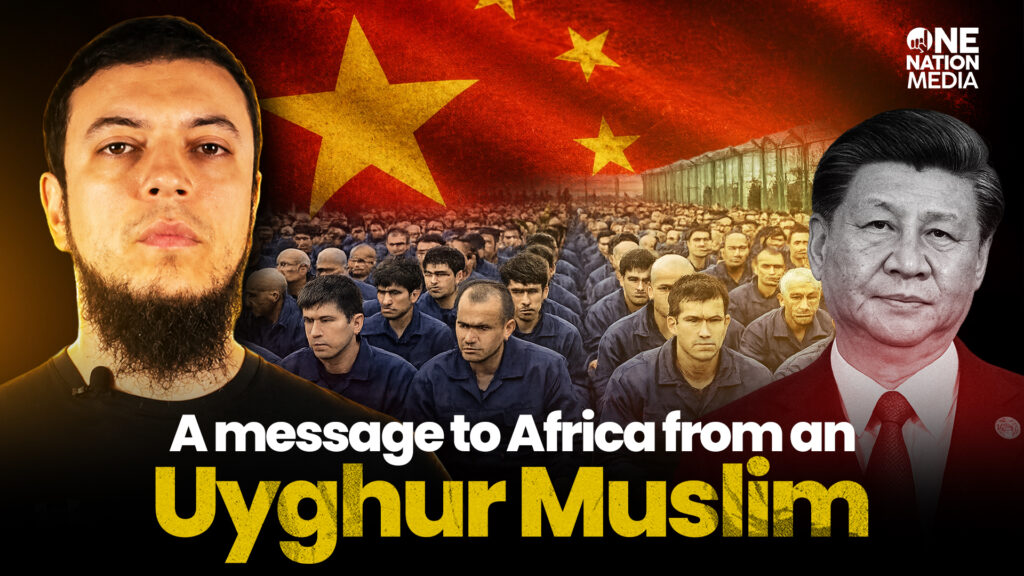
Behind China’s rise as a global superpower lies a vast authoritarian system built on surveillance, ideological control and the suppression of independent identities. Few communities have experienced this more brutally than the Uyghurs, a Muslim Turkic ethnic group from Xinjiang province in north-west China, a region Uyghurs and Muslims worldwide refer to as East Turkestan.
According to Chinese state statistics, the Uyghurs number around 11.5 million, though the real figure is believed to be up to three times higher. They live in the Xinjiang “autonomous region” and are predominantly Sunni Muslims who speak a Turkic language written in a modified Arabic script. They possess a distinct religious, cultural and historical identity that differs sharply from China’s Han majority.
Over the past decade, the United Nations, human rights organisations and multiple governments have documented what many describe as one of the most extensive state-led repression campaigns in the modern world. Reports have detailed mass internment, forced labour, disappearances, religious restrictions and sophisticated surveillance systems targeting Uyghur Muslims.

In 2021, the United States State Department stated that “genocide and crimes against humanity occurred during the year” against the Uyghurs. A 2022 UN report similarly concluded that China’s actions in East Turkestan “may constitute international crimes, in particular crimes against humanity.”
Mass internment and surveillance
One of the most controversial aspects of China’s policies in East Turkestan has been the mass detention of Uyghurs in what Beijing describes as “vocational education and training centres.”
Human rights organisations, however, have described the facilities as political re-education camps designed to enforce ideological conformity and suppress Islamic identity. Since 2016, at least one million Uyghurs are believed to have passed through the detention system.
Alongside the camps, Chinese authorities have developed an extensive surveillance apparatus across East Turkestan. Uyghurs are subjected to facial recognition monitoring, phone tracking, biometric data collection and constant scrutiny of their movements, contacts and online activity.
In one of the more intrusive aspects of the surveillance system, Chinese officials have reportedly been assigned to Uyghur households under a “Visit, Benefit and Gather” programme intended to monitor, indoctrinate and assess families inside their own homes.
Forced labour and cultural repression
The repression extends beyond detention and surveillance. UN experts have raised serious concerns over large-scale forced labour programmes involving Uyghurs transferred into factories and industrial sectors across China.
According to UN findings, the coercive nature of these labour transfer schemes may amount to forcible transfer and enslavement as crimes against humanity.
Beijing has also been accused of systematically targeting Uyghur religious and cultural identity. Under the Chinese Communist Party’s policy of the “sinicization of Islam”, Islamic belief and Uyghur traditions are being reshaped to conform to Communist Party ideology and Han Chinese cultural norms.
UN experts have warned that Uyghur language, literature, music and academic work are increasingly treated as threats to national security. Prominent Uyghur ethnographer Rahile Dawut was disappeared by authorities, accused of “separatism” and reportedly sentenced in secret to life imprisonment.
Thousands of mosques and Islamic sites across East Turkestan have also reportedly been damaged, altered or demolished as part of broader efforts to reshape the region’s religious landscape.
Global silence and geopolitical interests
Despite widespread documentation of abuses in East T, many Muslim-majority governments have remained largely silent or muted in their criticism of Beijing. Analysts attribute this in part to China’s growing economic influence across the Muslim world through trade, infrastructure investment and strategic partnerships.
Critics argue that the Uyghur crisis exposes not only the extent of China’s authoritarian control, but also the willingness of governments and international institutions to overlook the persecution of Muslims when major geopolitical and economic interests are involved.
Thousands of Uyghurs living abroad have reportedly had no contact with relatives in East Turkestan since 2017 or 2018. Human rights groups estimate that around 500,000 people, including intellectuals, writers and religious figures, are either in custody or serving lengthy prison sentences.
For many observers, East Turkestan has become one of the clearest examples of how modern surveillance technology, ideological engineering and state power can be used to suppress an entire Muslim population in the 21st century.