


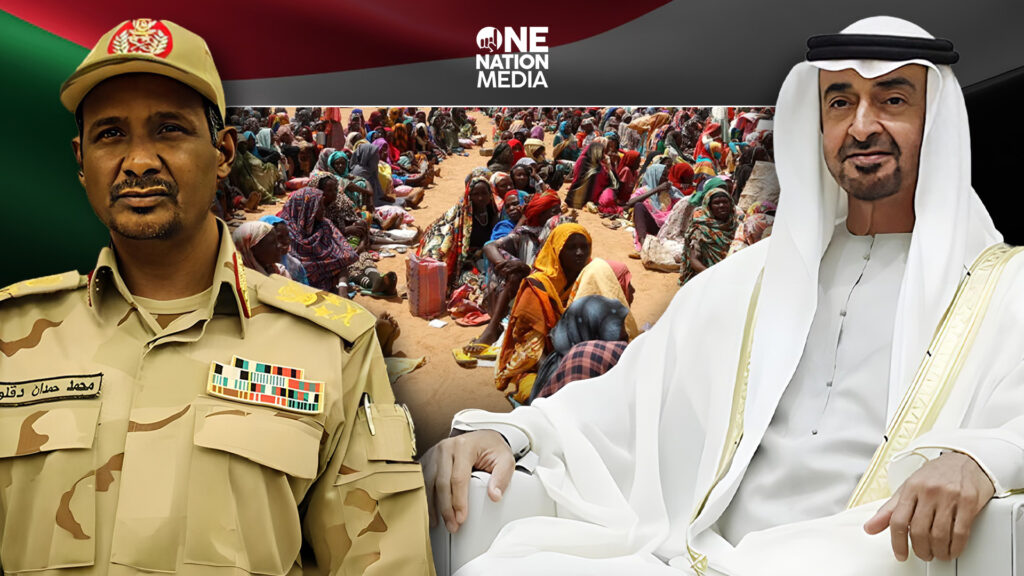
As Sudan’s devastating war enters its fourth year, there is little sign that the country’s warring factions are prepared to pursue peace. Both the Sudanese Armed Forces (SAF) and the Rapid Support Forces (RSF) continue to pursue military victory, rejecting repeated calls for a ceasefire and meaningful negotiations.
The prolonged conflict has been fuelled not only by internal power struggles, but also by the interference of foreign powers seeking influence over Sudan’s strategic position and vast mineral wealth. Among the most controversial external actors is the United Arab Emirates (UAE), which has faced mounting accusations of backing the RSF despite publicly denying involvement.
The RSF, widely accused of atrocities against civilians, has played a central role in Sudan’s destruction. Reports of massacres, ethnic violence, looting and sexual violence have emerged throughout the conflict, particularly in Darfur and Kordofan.
Tragically, tens of thousands of Sudanese have been killed and around 14 million displaced, creating what the United Nations describes as the world’s largest humanitarian crisis. The UN says nearly 30 million people are now in urgent need of humanitarian assistance, while famine conditions continue to spread across multiple regions.
Modern warfare has become increasingly central to the conflict. UN Human Rights Chief Volker Türk recently stated that drones are now among the leading causes of civilian deaths, with more than 880 people reportedly killed in drone strikes between January and April 2026.
Recent attacks have targeted Khartoum International Airport, disrupting civilian flights, while fierce fighting continues across Darfur and Kordofan. Famine has now been declared in several areas, with reports indicating that more than 80% of displaced families are skipping meals in order to survive.
The UAE, Saudi Arabia and Ethiopia remain among the key regional players accused of influencing the trajectory of the war. Abu Dhabi has repeatedly denied allegations that it supplied drones and military support to the RSF, despite growing scrutiny from international observers, humanitarian organisations and Sudanese voices accusing the Gulf state of helping prolong the conflict.
The war has forced millions to flee into neighbouring countries such as Chad, where vast refugee camps have emerged along the eastern border under dire humanitarian conditions.
Médecins Sans Frontières (MSF) says Sudan’s healthcare system has effectively collapsed, with outbreaks of meningitis and other diseases spreading rapidly, particularly among displaced populations. Aid organisations have also documented widespread sexual violence against women and girls carried out during the conflict