


For more than a century, Muslims have been taught to view the Caliphate not as a legitimate political institution rooted in normative Islamic tradition, but as a dangerous relic incompatible with the modern world, writes Dilly Hussain.
Across mainstream political discourse, the Caliphate has long been portrayed as either a relic of history or a threat to modern civilisation itself. In Western media, policy circles and much of the post-colonial Muslim-majority world, the very idea of Islamic governance beyond the modern nation state is often framed as inherently extremist, authoritarian or dangerously utopian.
Yet for over 1 300 years, the Caliphate was neither a fringe fantasy nor an abstract theological concept. It was the central political framework through which Muslim societies understood authority, law, governance and civilisational unity.
From the death of the Prophet Muhammad (SAW) in 632 CE (11 AH) until the abolition of the Ottoman Caliphate in 1924, the institution shaped vast stretches of the Muslim world politically, intellectually and spiritually. Muslim civilisation experienced periods of immense scientific advancement, economic prosperity and territorial expansion alongside civil wars, dynastic rivalries, political repression and administrative corruption.
Like every major civilisation in history, the Caliphate was neither flawless nor static. Muslims should avoid presenting Islamic history as a utopian political project untouched by human weakness or conflict, while also rejecting the modern tendency to reduce centuries of Islamic governance into caricatures shaped by colonial historiography, secular ideology and post-9/11 security narratives. Modern discussions surrounding the Caliphate are therefore rarely historical in any neutral sense. At their core, they are political arguments about why Islamic political sovereignty has become uniquely illegitimate in modern discourse.
The Caliphate as a normative Islamic institution
The Caliphate, or Khilafah, derives from the Arabic word khalaf, meaning successor. Following the death of the Prophet Muhammad (SAW), the Muslim community was led by successive Caliphs who assumed political leadership over the Ummah.
The Prophet (SAW) said: “The children of Israel used to have their political affairs governed by prophets. Whenever a prophet died, another prophet succeeded him. But there will be no prophet after me; there will instead be Caliphs, and they will number many.” [Bukhari]
Classical Islamic scholarship understood the office of the Caliph as both a political and religious authority responsible for governing by the Shariah, protecting the Muslim community, establishing justice and public order, safeguarding the religion, and managing the affairs of the Ummah.
As Muslim territories rapidly expanded under the Rashidun and Umayyad Caliphates into North Africa, Persia, Central Asia and the Mediterranean, governance naturally became more complex and politically contested. Rebellions, assassinations and dynastic struggles existed throughout Islamic history, but those realities did not negate the normative Islamic understanding that Muslims were politically united under an overarching civilisational framework rooted in Islam.
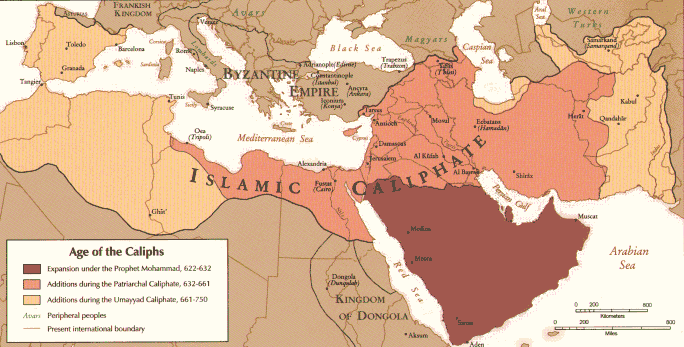
Despite internal conflicts across various dynasties, Islamic governance was never entirely detached from religious legitimacy. Muslim scholars, jurists and judges consistently played a central role in law, governance and public life. Even where rulers acted oppressively or violated Islamic principles, they still sought legitimacy through Islam rather than racial, ethnic or cultural affinities. That distinction is important because it demonstrates how political authority within Muslim civilisation historically remained tied, at least formally, to Islam itself.
Beyond romanticism and cynicism
Modern Muslim engagement with the Caliphate often falls into two extremes. The first is romanticism, where Islamic history is presented as an uninterrupted golden age stretching from the Maghreb to far-east Asia, untouched by oppression, political violence or injustice. The second is cynicism, where over a millennium of Islamic governance is dismissed as little more than authoritarian dynasties cloaked in religious language.
Both approaches flatten history into simplistic narratives. The romantic view ignores the undeniable reality of civil wars, hereditary rule and political repression, while the cynical view, often shaped by Western historiography and post-colonial assumptions, dismisses the entire Islamic governing tradition because it fails to conform to modern secular liberal standards.
No major civilisation in history was free from internal conflict or abuses of power. Yet Islamic political history is uniquely treated as evidence that Muslims must permanently abandon their own governing traditions altogether. That double standard sits at the heart of the modern debate surrounding the Caliphate.
One Ummah, one political authority
A consistent theme throughout Sunni Islamic political thought was the ideal of political unity under one leader. This understanding was rooted in both scripture and historical practice. The Prophet Muhammad (SAW) explicitly warned against rival claimants to political leadership, and classical Sunni scholarship generally maintained that there should not be multiple competing Caliphs ruling simultaneously over the Ummah. Even during periods where Muslim dynasties competed militarily and politically, there remained an overarching recognition of the institution of the Caliphate itself.
Muawiyah ibn Abi Sufyan (RA) did not formally seek allegiance (bayah) as Caliph until after the death of Ali ibn Abi Talib (RA) and the abdication of Hasan ibn Ali (RA) in order to prevent further civil war. The Seljuks, despite becoming the dominant military power in the Muslim world, still recognised the symbolic authority of the Abbasid Caliph in Baghdad. Salahuddin al-Ayyubi (RH) restored Sunni allegiance to the Abbasid Caliphate after dismantling Ismaili Fatimid rule in Egypt, while the Ottoman Sultans later assumed the Caliphate following the symbolic transfer of authority from the final Abbasid Caliph in Cairo in 1517 CE.
Even autonomous Muslim powers operating independently often continued acknowledging the wider institution of the Caliphate as a source of legitimacy and unity. Despite wars, rivalries and dynastic fragmentation, Muslims historically still viewed themselves as belonging to a broader political civilisation transcending tribe, ethnicity and geography. That consciousness, however, has been profoundly weakened in the modern age.
The post-colonial nation state
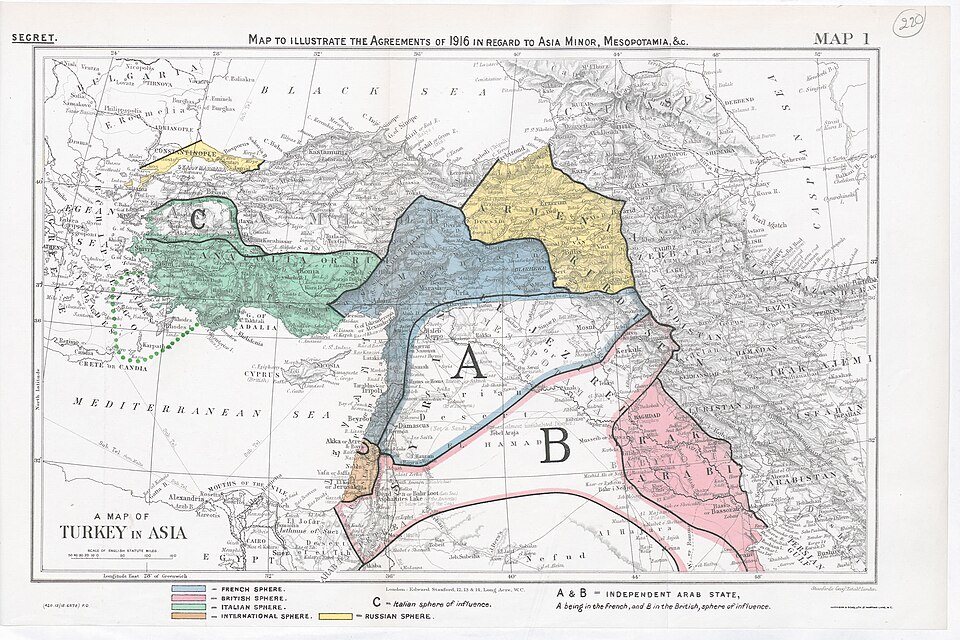
The abolition of the Ottoman Caliphate in 1924 was not merely the collapse of an empire. It marked the consolidation of a new political order imposed upon the Muslim world: the secular nation state. Over the following century, much of the Muslim world was reorganised into fragmented states with artificial borders, competing national identities and political systems largely inherited from European colonial powers. Arab nationalism, Turkish nationalism and secular republicanism gradually replaced the older civilisational concept of a politically interconnected Ummah.
Today, Muslims are expected to accept borders drawn by Western colonial administrators, secular governing systems and ethnonational identities as permanent and unquestionable realities. At the same time, any aspiration towards transnational Islamic political unity is routinely framed as irrational, dangerous or archaic.
The consequences of this fragmentation are visible across the Muslim-majority world today. From Palestine to Kashmir, from Sudan to Syria, Muslims continue experiencing political weakness, foreign dependency, economic exploitation and military vulnerability within a deeply fragmented order where state interests routinely override wider civilisational concerns.
Many Muslim-majority countries possess immense strategic resources and populations bound by a shared religious identity, yet remain politically divided, economically dependent and vulnerable to external interference. In many cases, Muslim governments cooperate more closely with foreign powers than neighbouring Muslim countries facing occupation, sanctions or war.
This fragmentation was not simply an accidental by-product of history. It became one of the defining outcomes of European colonial rule and remains central to the maintenance of modern global power structures. The current international order is built upon the supremacy of the nation state system, meaning any political identity transcending nationalism, particularly one rooted in religious civilisation, is viewed as a challenge to that order. Discussions surrounding the Caliphate are therefore rarely approached neutrally because they touch directly upon the legitimacy of the existing global system itself.
The shadow of the War on Terror
The post-9/11 era further distorted Muslim engagement with Islamic governance. Following the invasions of Afghanistan and Iraq, the rise of securitised counter-extremism policies and the emergence of groups like ISIS, the concept of the Caliphate became psychologically fused in public discourse with terrorism and political violence. Many Muslims consequently began approaching their own political history defensively, often feeling compelled to apologise for or distance themselves from concepts deeply rooted in normative Islamic tradition.

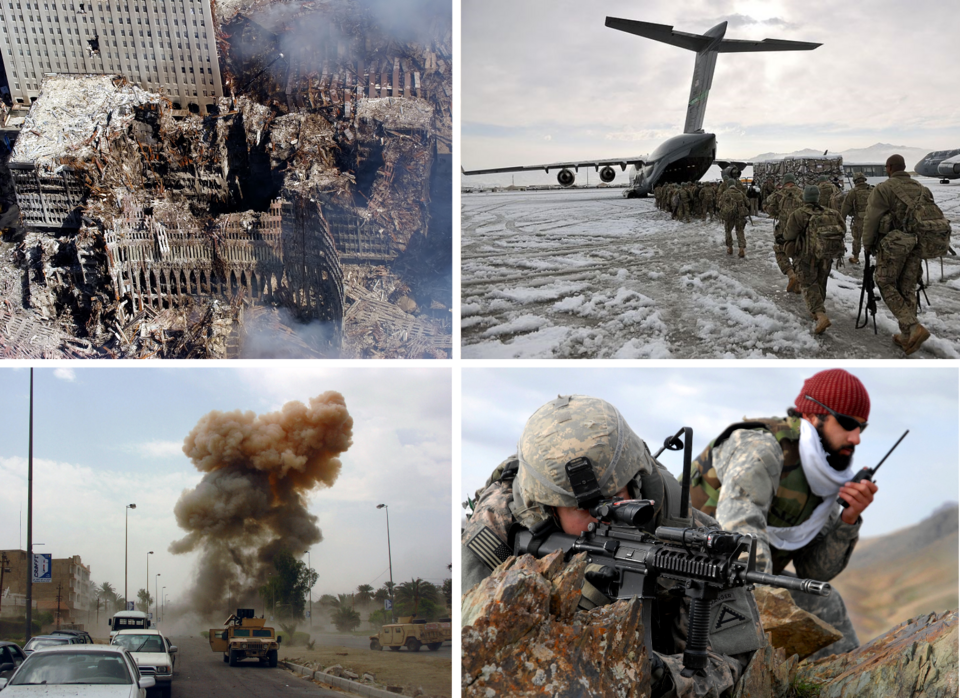
Reducing the entire history of Islamic governance to ISIS, however, is historically indefensible. ISIS represented neither the complexity of Islamic political history nor the normative scholarly understanding of the Caliphate across Sunni tradition. It was a violent insurgent movement born out of invasion, state collapse and geopolitical catastrophe.
Modern discourse nevertheless frequently treats ISIS not as an aberration produced by chaos and war, but as the inevitable culmination of Islamic political thought itself. No other civilisation is judged through such a politicised, selective lens. European history is not reduced entirely to fascism, nor is liberal democracy dismissed because of colonialism, slavery or genocide. Muslims, however, are routinely expected to interpret their own political history exclusively through its worst and fringe distortions.
History, legitimacy and political reality
One of the most persistent misconceptions surrounding the Caliphate is the assumption that historical wrongdoing automatically invalidates the institution itself.
The existence of tyrannical rulers, hereditary dynasties, political violence or civil wars did not negate the broader Islamic framework within which Muslim societies functioned. Muslim scholars historically distinguished between the normative principles of Islamic governance and the imperfect conduct of rulers themselves.
The fact that some Caliphs acted unjustly did not nullify the obligation of justice itself. Political conflict did not erase the role of Shariah in governance, nor did the failures of caliphs invalidate the broader Islamic civilisational framework underpinning Muslim societies. Islamic history was neither utopian nor uniquely barbaric. It was a human civilisation striving, however imperfectly, to organise society around Islam.
A civilisation stripped of political confidence
The modern Muslim world suffers not only from military weakness or political fragmentation, but from a deeper crisis of confidence.
For decades, Muslims have been conditioned to believe that their civilisation may survive as spirituality, culture and personal identity, but never as a serious political framework. Islam may exist privately, but not govern publicly. It may inspire morality, but not sovereignty. It may shape personal conduct, but not civilisation itself.
These assumptions underpin much of modern discourse surrounding the Caliphate. The issue is therefore larger than nostalgia for past empires or simplistic calls for political restoration. The real question is whether Muslims still possess the intellectual confidence to view Islam as a comprehensive framework capable of shaping law, governance, morality and public life in the modern world.
For over a century, Muslims have largely been taught to think of themselves primarily through the prism of nationality, ethnicity and state identity rather than as part of a wider civilisation bound together by Islam. The result has been an Ummah increasingly conscious of its shared suffering, yet politically fragmented, strategically directionless and dependent on systems shaped largely by external powers.
To speak about the Caliphate today is therefore not merely to discuss history, theology or governance. At its core, it is a discussion about whether the Muslim world can recover any meaningful sense of civilisational confidence, political independence and collective direction in the face of continued fragmentation and external dominance.
Beneath the arguments over history lies a deeper unresolved tension: the modern world continues demanding that Muslims permanently detach themselves from their own political and religious tradition in order to be considered acceptable participants in global society. That demand should not simply be interrogated, but rejected altogether, because it rests not upon any universal principle or intellectual consistency, but upon the preservation of Western political dominance and the deeply hypocritical assumption that every civilisation may define itself politically except Islam.
You can read more of One Nation Media’s Islamic civilisation and African history features here.