


America did not come to Africa with mass invasions, but with military bases, drones and partnerships. In many cases, the result has been instability, destruction and long-term dependency, write Dilly Hussain and Neelam Rahim.
For nearly 25 years, the United States has framed its presence in Africa as a limited counterterrorism effort. Beneath this language of partnership, however, lies a far more entrenched reality, defined by military infrastructure, strategic positioning and the steady expansion of influence across key regions of the continent.
Following the September 11 attacks, Washington began to view Africa not as a peripheral concern, but as a potential theatre in its global “War on Terror”. This shift reshaped US foreign policy, placing African states within a broader security architecture aimed at pre-empting threats before they reached Western shores.
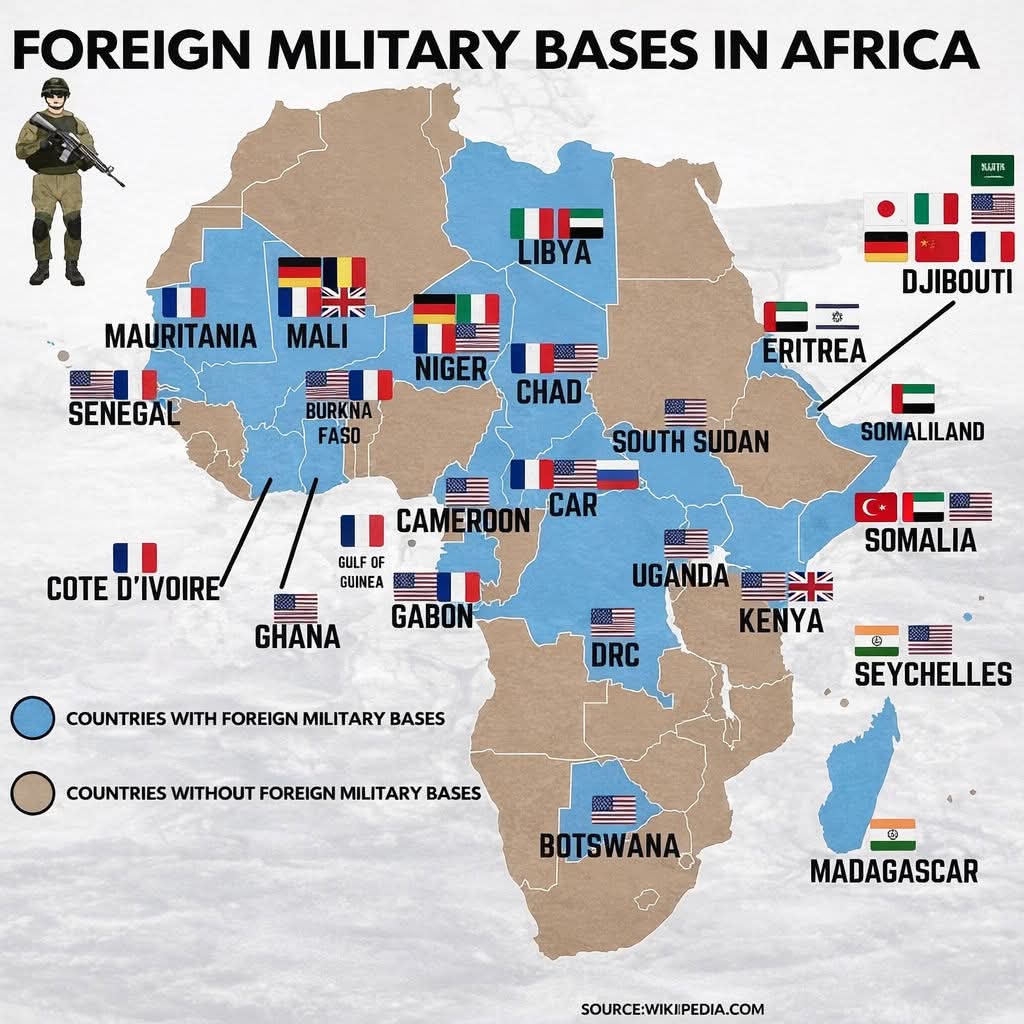
The establishment of Camp Lemonnier in Djibouti in 2001 marked the beginning of a permanent American military foothold on the continent, followed by the creation of the United States Africa Command (AFRICOM) in 2007, designed to centralise and expand US military operations across Africa.
Unlike the large-scale invasions of Iraq and Afghanistan, America’s African strategy has been deliberately calibrated. It is presented as a “light footprint” approach focused on training local forces, sharing intelligence and supporting domestic militaries. On paper, deployments are limited, temporary and cooperative; in practice, they form the backbone of a long-term military presence.
Light footprint and drone warfare
Beyond its permanent base in Djibouti, the US maintains a network of smaller, often semi-permanent facilities across the continent. These installations, rarely publicised in detail, allow Washington to project power without the visibility of traditional occupation.
One of the most significant is the drone base in Agadez, Niger, which has served as a hub for surveillance operations across North and West Africa. While nominally operated by local forces, such sites have been central to US intelligence gathering and strike capabilities, allowing America to maintain reach without responsibility by embedding itself within national security structures while avoiding the political costs associated with large troop deployments.
Drone warfare has become a defining feature of America’s War on Terror in Africa. These operations are routinely justified as precise and effective tools against groups such as Al Shabab in Somalia, Boko Haram in Nigeria, and other Al Qaeda and ISIS-linked factions in West Africa.
In Somalia, US strikes have reportedly killed large numbers of fighters in single operations. Yet the broader pattern seen across multiple theatres is consistent: drone campaigns often produce civilian casualties, misidentification of targets and long-term resentment among local populations, raising serious questions about their strategic effectiveness.
Rather than resolving insecurity, such strategies risk sustaining it, reinforcing a circular logic in which instability justifies intervention and, in turn, deepens instability. In this cycle, security becomes not an outcome, but a permanent condition.

AFRICOM’s opacity
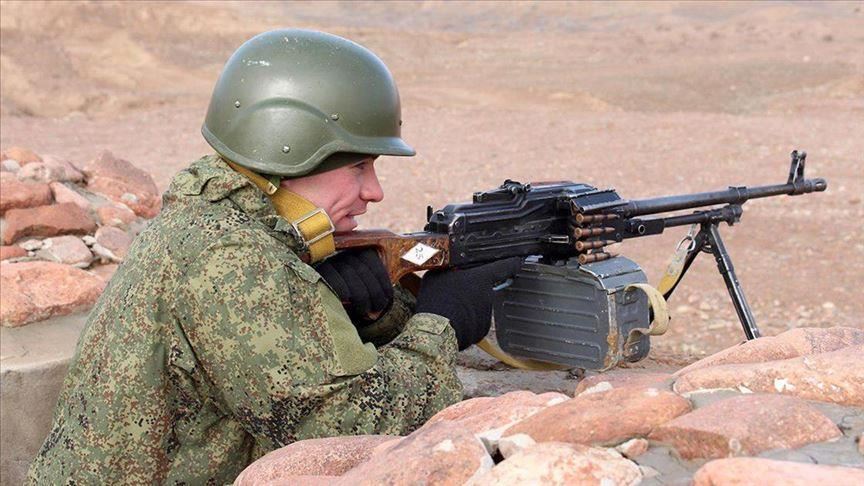
Another defining feature of America’s presence in Africa is its lack of transparency. AFRICOM does not disclose full details of troop numbers, operational scope or the extent of its deployments. US personnel are known to be active in at least a dozen Sub-Saharan African countries, yet the true scale of this presence remains unclear.
This opacity makes accountability difficult, not only for African governments but for the populations affected by these operations, and raises a more fundamental question about sovereignty and the nature of these partnerships.
For many African states facing internal insecurity, cooperation with Washington is not always a free choice. It is often shaped by diplomatic pressure, economic leverage and the implicit threat of isolation, conditions under which partnership can blur into forced dependency.
The US formally restricts military assistance to foreign units implicated in gross human rights abuses. Yet in practice, cooperation has continued in countries where security forces face credible allegations of torture, extrajudicial killings and systemic violations.
Nigeria
In Nigeria, for example, units receiving US support have been accused of abuses in operations against Boko Haram, with similar patterns emerging elsewhere on the continent. This exposes a contradiction between Washington’s stated commitment to human rights and its strategic priorities, where stability, however defined, is often prioritised over accountability.
The risks of this approach were highlighted in late 2025, when US airstrikes in Sokoto State, Nigeria, targeted what officials described as “ISIS linked militants.” Subsequent reports suggested that some of the rural locations struck had no confirmed ties to the group, raising serious concerns about intelligence accuracy and civilian harm.
The choice of Sokoto was particularly significant. As a historic centre of Islamic authority in West Africa, foreign military intervention in the region carries deep symbolic weight, amplifying both local and regional sensitivities.
The political framing of the strikes further complicated matters. US President Donald Trump justified the intervention in part through claims of Christian persecution, narratives that were widely disputed and risk inflaming tensions in a country already navigating fragile religious and ethnic dynamics.
Reassertion after retreat
Recent developments suggest that the US is not scaling back its presence in Africa, but recalibrating it. Following its withdrawal from Niger and a period of declining influence in parts of the Sahel, Washington appears to be reasserting itself through more aggressive operational tactics.
AFRICOM has signalled an increased reliance on airstrikes and surveillance, while operations targeting Al Shabab in Somalia have intensified, with dozens of strikes reported in early 2026 alone. This reflects a broader pattern in which, where direct control becomes difficult, remote warfare and intelligence dominance are used to maintain influence.

Beyond the battlefield
American engagement in Africa is not limited to military activity. Diplomatic relationships remain central, particularly with regional powers such as Egypt, where high-level talks with Washington have addressed crises in Sudan, the Horn of Africa and Gaza.
Egypt’s role as a subservient intermediary highlights the interconnected nature of these relationships, where security cooperation, regional diplomacy and geopolitical alignment form part of a wider contest over influence. In this context, Africa is not an isolated theatre, but a critical node within a global strategic framework.
The US presents its presence in Africa as a partnership grounded in shared security interests, and in some cases it has contributed to strengthening certain counterterrorism capabilities. But the broader trajectory tells a more complex story, one in which military infrastructure expands, transparency remains limited and sovereignty is increasingly negotiated rather than assumed.
The central question is no longer whether America is present in Africa, but how that presence should be understood: is this a model of cooperation, or a system of managed destabilisation; is this counterterrorism, or the quiet expansion of military reach under its “War on Terror” banner against the continent’s Muslim population?
Read ONM’s full four-part ‘Imperialism in Africa’ series: Part 1 (France), Part 2 (China), Part 3 (United States) and Part 4 (UAE).