


From the CFA franc to military interventions in the Sahel, France continues to shape political outcomes, control economic direction and restrict genuine sovereignty across Muslim-majority regions of Africa. This sustains a neo-colonial system long after so-called independence. Dilly Hussain and Neelam Rahim write.
France’s presence in Africa is often framed as a legacy of history or a partnership rooted in cooperation. In reality, it represents something far more enduring: a rebranded system of control that has outlived formal colonial rule and continues to shape the political, economic and security landscape of large parts of the continent, particularly in Muslim-majority regions of the Sahel.

Colonial foundations
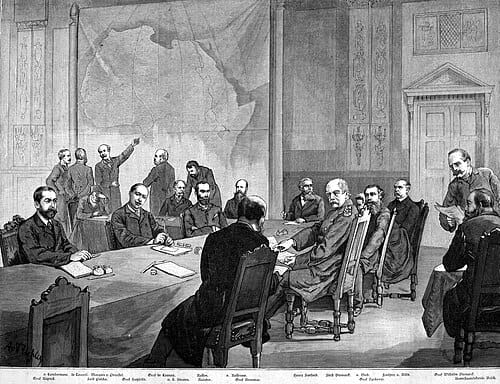
The foundations of this system were laid during the late 19th century, when European powers carved up Africa at the Berlin Conference. France emerged as one of the dominant colonial forces, extending its rule across vast territories in West and Central Africa. Borders were drawn to serve imperial interests, not indigenous realities or aspirations. Economies were structured around extraction, not development, and governance systems were imposed to maintain control rather than empower local populations.
Colonial rule was coercive and exploitative. Resources were systematically extracted, local populations were taxed and controlled, and hundreds of thousands of Africans were conscripted into French military units such as the Tirailleurs Sénégalais. These soldiers were sent to fight France’s wars in Europe, serving an empire that denied them sovereignty in their own lands.
‘Independence’ without sovereignty
Independence movements in the 1960s appeared to mark a turning point. Flags changed and African leaders assumed power, but the underlying architecture of control remained largely intact. Today, nearly half of African Union member states were once under French rule, and the legacy of that relationship continues to shape their political trajectories.
At the centre of this system is the CFA franc, used by 14 African countries. Pegged to the euro and historically tied to the French treasury, it has ensured that monetary policy in large parts of Africa remains constrained by external influence. While presented as a tool for stability, it has functioned in practice as a mechanism that limits genuine sovereignty, keeping economies tied to decisions made beyond their borders.
This broader framework, often described as “Françafrique”, blends political, military and economic influence. It allows France to maintain control without the optics of direct rule, operating through alliances with local elites, military partnerships and strategic interventions.
Mali
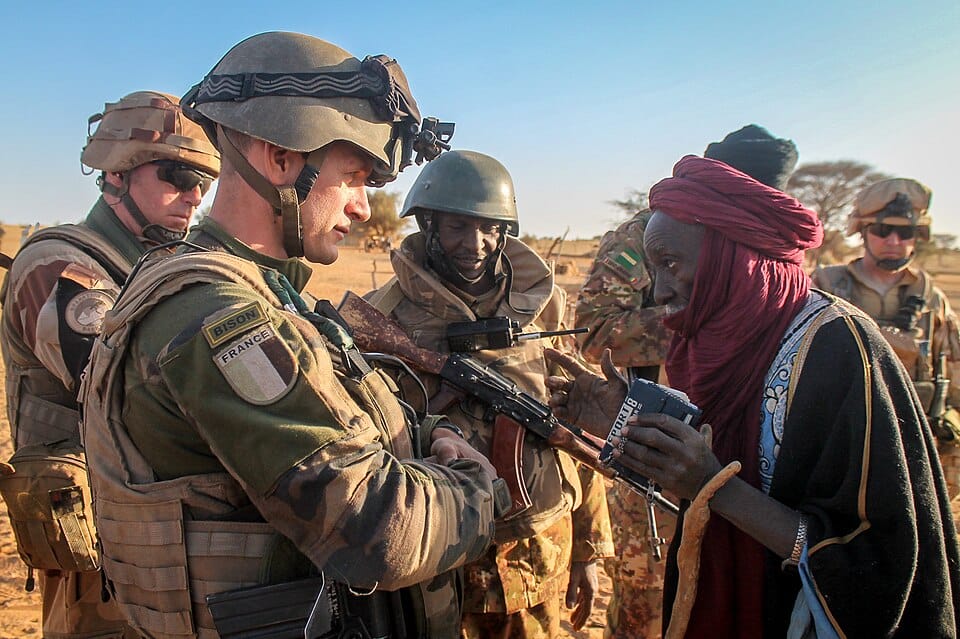
Nowhere is this more evident than in Mali, a Muslim-majority country that became central to French military operations in the Sahel. Under the banner of counterterrorism, France deployed troops through ‘Operation Barkhane’. While initially welcomed, this presence failed to deliver meaningful security or stability over time.
Insecurity persisted, public frustration grew, and this culminated in mass protests and military coups in 2020 and 2021. By 2022, French forces were expelled, bringing to an end the “cooperation” that was seen by many Malians as occupation in all but name.
Burkina Faso and Niger
This pattern has extended to Burkina Faso and Niger, where populations are increasingly vocal about sovereignty and foreign influence. Public sentiment has shifted from cautious acceptance to open resistance.
In these Muslim-majority societies, the issue is no longer limited to security. It is about dignity, autonomy and the right to determine their own future without external control. The rejection of French presence reflects a broader awakening that challenges the legitimacy of the post-colonial order, with Ibrahim Traoré’s rise to power as president of Burkina Faso serving as a recent example.
Senegal and Chad
Senegal has long been viewed as one of West Africa’s most stable democracies, maintaining steady relations with Paris. French companies remain embedded in key sectors, and historical ties are visible in everyday life. However, the mood is changing. A younger generation is increasingly sceptical of what independence truly means if economic control remains external. Protests in recent years have reflected deeper frustrations about economic inequality and political sovereignty.
In Chad, the relationship with France is closely tied to military and strategic interests. The country hosts French forces and plays a central role in regional counterterrorism efforts. While this partnership is framed as essential for stability, it raises fundamental questions. Stability has often been prioritised, but frequently at the expense of democratic progress and genuine self-determination.
The result is a system that maintains order, but not necessarily justice in any meaningful sense.

A neo-colonial system under strain
Across sub-Saharan Africa, particularly in Francophone regions, a clear pattern has emerged. A disproportionate number of coups in recent years have taken place in countries with deep historical ties to France. While each case has its own internal dynamics, the broader context of external influence, economic dependency and political frustration forms a common thread.
What is now unfolding is not simply political change, but a shift in consciousness. Across the Sahel and beyond, there is a growing rejection of the old order. Governments are exploring alternative alliances, and populations are becoming more vocal in their demand for genuine sovereignty.
In Muslim-majority African countries, this carries deeper significance. It is not only about governance, but about reclaiming control over land, resources and political direction from foreign systems that have long operated beyond their consent.
France’s footprint in Africa has not disappeared, but has transformed. From currency systems to military partnerships, from political networks to cultural ties, the mechanisms of influence remain intact, even as they are increasingly challenged. What is changing is the response.
Across the continent, a new political consciousness is emerging, one that is less willing to accept inherited arrangements and more determined to redefine them. In many of these regions where Muslim populations form the majority, the question of sovereignty is not merely political or economic, but civilisational, shaped by deeper tensions over who defines truth, authority and the direction of society in a post-colonial world still influenced by Western ideological dominance.
Whether this leads to genuine sovereignty or simply a reshuffling of external influence remains to be seen. But one thing is clear: the era of unquestioned French dominance in Africa is over.