


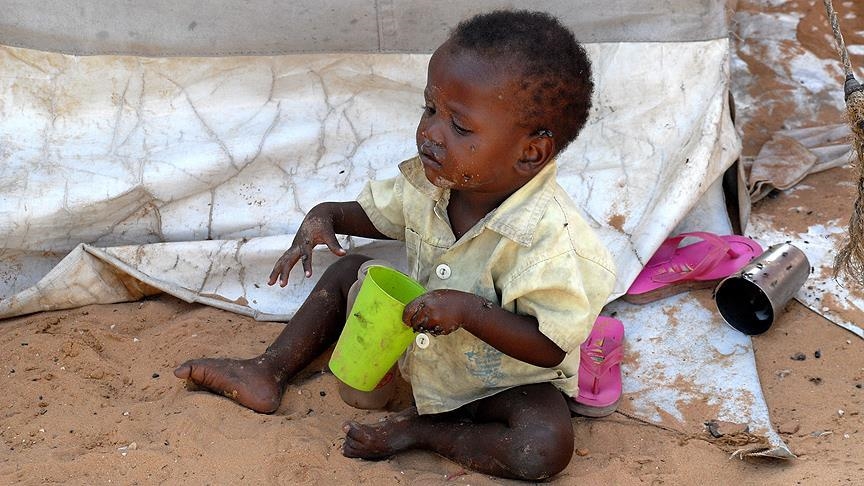
One in five people on the African continent goes to bed hungry at night, a number that has doubled since 2019. And while Sudan, Burundi, Ethiopia and Chad stand out with particularly serious challenges, the situation is not much better in Africa’s powerhouses of Nigeria and South Africa
Experts warn over 318 million people across Africa are facing acute hunger, and more shocking is that food insecurity has moved from being a seasonal challenge in Africa to a permanent state of emergency driven by relentless conflicts, climate shocks, and a crippling cost-of-living crisis.

While some regions show glimmers of resilience, the latest data from early 2026 paints a stark picture of the continent’s giants and its most vulnerable states.
The “Quiet Crisis” in South Africa
In Africa’s most industrialised economy, hunger looks different, but is no less severe.
- The Numbers: A landmark 2026 report reveals that South Africa’s severe hunger rate has jumped to eight percent, meaning over 1,1 million households now go entire days without food.
- The Vulnerable: Female-headed households are twice as likely to be food insecure compared to male-headed ones. The Eastern Cape has emerged as the national epicenter, with over 12% of households facing severe scarcity.
- The Glimmer of Hope: Unlike its northern neighbors, South Africa’s agricultural sector has entered 2026 with some optimism due to favorable weather and biosecurity initiatives, though high food prices continue to erode these gains for the poor.
In a shocking revelation in November last year, the South Africa’s Department of Health has confirmed that close to 1 000 children died of malnutrition in the past 18 months.

Further reports suggests one in four South Africans go hungry daily. Of the 21 million children in the country, 9 million are currently hungry.
Activists like Dr Busiso Moyo, of Union against Hunger, say they’re on a mission to change this.
“We are also concerned about the government’s inaction, perceived inaction insofar as showing leadership in this space and showing leadership of governing and intervening insofar as the food value chain is concerned.

“So, part of that would be us embarking on symbolic demonstrations, protest action, being involved in policy processes but more than anything else, trying to sensitise the South African state to take the issue of hunger as a matter of life and death.”

The Epicentre of the Storm
Nigeria currently holds the grim title of having the highest number of food-insecure people globally.
- The Numbers: An estimated 34,7 million Nigerians — roughly the population of Canada — are projected to be in a food crisis by the mid-2026 lean season.
- The Hotspots: The situation is most dire in the northwest and northeast, particularly in states like Borno, Zamfara and Sokoto. In Borno alone, roughly 15 000 people are living in “famine-like” conditions, just one step away from catastrophe.
- The Cause: It is a man-made disaster. Persistent banditry and insurgent attacks have turned fertile belts into “no-go” zones, preventing farmers from harvesting their crops. Combined with a nearly 30-year high in inflation and the removal of fuel subsidies, basic staples have simply moved out of reach for the average family.
- Funding cuts in early 2026 have already forced the scale-back of nutrition programmes in Nigeria, affecting over 300,000 children.
- “Data tells us where hunger is deepening,” says Dr Marcus Ogunbiyi of Nigeria’s Ministry of Agriculture.
- “But these results go beyond data; they speak to the realities of millions of households”.

The Worst-Off: Famine’s Return
In some parts of Africa, “insecurity” is too mild a word for the storm sweeping the continent. In 2026, famine has officially returned to the continent.
Devastated by civil war, Sudan is currently the “worst example” of this tragedy, with confirmed famine in parts of the country—the first time this century famine has struck two global locations (Sudan and Gaza) simultaneously.
South Sudan and Somalia remain at the top of the global “Hunger Hotspot” list. In South Sudan, a staggering 70% of the population is food insecure.
Burundi currently ranks as the most affected country by percentage in some indices, while Chad struggles to support nearly 4,7 million hungry people amidst a weak farming system and an influx of refugees from neighboring wars.
The Cost of Inaction
The World Food Programme (WFP) warns that aid is drying up just as it is needed most. Funding cuts in early 2026 have already forced the scale-back of nutrition programmes in Nigeria, affecting over 300,000 children.
“Data tells us where hunger is deepening,” says Dr Marcus Ogunbiyi of Nigeria’s Ministry of Agriculture.
“But these results go beyond data; they speak to the realities of millions of households”.
Without a massive infusion of both humanitarian aid and long-term investment in climate-smart farming, Africa’s breadbasket risks remaining a symbol of what could have been.